Tuesday, October 18, 2011

JAGJIT SINGH - THE UNFORGETTABLE.


The 10th of October 2011 was a forgettable day for Indian music in general and for Ghazal music in particular as it was on that day that the 'Unforgettable' and one of the greatest exponents of modern Indian ghazal, Jagjit Singh ,choose to make an exit from this world. A lot has appeared since then in the print media and on the visual media about Jagjit Singh's attributes as a singer, his background, his early days of struggle and set backs in life, his remarkable successes and his contributions to the world of ghazals.

To me, his greatest contribution was the way he brought Indian ghazal, from the unreachable height it was held in the realm of experts and stalwarts like Mehdi Hassan, Ghulam Ali, Begum Akthar and so on, down to the hearts of ordinary music lovers not only by his soulful singing of traditional lyrics but also through his own compositions. For many, during the 60s and early 70s, ghazals meant filmy ghazals especially the wonderful songs rendered by Talat Mahmood in his silken trembling voice which were a treat to the ears. Songs of Rafi in light ghazal style were also there. But it was with the advent of Jagjit Singh with his silken, deep, pathos filled voice, clarity of words and beautiful expression of the subtleties that the modern Indian ghazal that could capture popular acceptance was born. While his vocal rendering towed the traditional line what made him different and attractive to music lovers was the way he used modern and even Western music in the background . Thus his ghazals supported by his beautiful romance filled voice could easily gel with the young generation. A comparable event was that in Malayalam music with the arrival of Jesudas with his classical Carnatic 'katcheris' in his inimitable style and sweet melodious voice.It was Jesudas who made Carnatic music popular in Kerala and audience thronged at his 'katcheris' just as they did at his light music programs. Classical compositions did get the benefit of melody and sweetness of voice, thanks to Jesudas just as Hindustani ghazals were embellished by the sweet voice and melodious singing of Jagjit. Later when Jesudas started his own recording studio, Tharangini at Thiruvananthapuram, several classical music albums were released by them covering his live programs making more listeners 'classical friendly'.

Yes, it was mainly Jagjit Singh followed by the likes of Pankaj Udhas, Peenaz Masani, Chandan Das, Hariharan,Talat Aziz, the husband-wife duos of Bhupinder Singh- Mitale and Roop Kumar Rathod - Sonali and so on who gave ghazal the popularity and acceptance it richly deserved. After the initial failure to get himself established in Hindi film music he returned after his marriage with singer Chitra to Bombay to be busy there. His first LP Album of ghazals THE UNFORGETTABLES with wife Chitra released by Gramophone Company of India in 1976 was an outstanding success and it continues to be a 'must possess' LP album for gramophone record collectors. All the ghazals in it were hits and the one 'Baat niklegi to phir door talak jayegi' in Jagjit's voice continues to be soul stirring. There was no looking back for Jagit singh and several LP albums came out including ' A MILESTONE Jagjit Singh- Chitra singh' with ten beautiful ghazals, including 'Pareshan raat sari hai sitaro tum so jao, all composed by Jagjit Singh himself.There is also an LP album covering the live concert of the singing duo at Wembley, London. The superhit song 'Kal chaudhvin ki raat thi' was one of the songs at the concert. Music India also had released a LP album, 'The Best of Jagjit & Chitra Singh', again a big hit.

In the early 80s Jagjit was very busy in Hindi films as a singer as well as a Music director. In film 'Saath Saath' with music by Kuldip Singh, there were two memorable ghazals by Jagjit,viz.,'Tum to dekha to yeh khayal aaya' and "Pyar mujhse jo kiya tumne to kya paayogi'
both sweetness and melody oozing out. In film ARTH with music by Jagjit Singh there are two great songs, 'Jhuki jhuki si nazar' and 'Tum itna jo muskura rahi ho'. In both Jagjit was at his best.

When Jagjit was at the height of success, tragedy struck him when his only son, Vivek, lost his life in an accident. Even as wife Chitra did chose not to sing thereafter Jagjit found solace in ghazals and several albums continued to be released by him viz.,KHAMOSHI, SAHER, TUM TO HAHIN TO, AFSANA, SOZ, MARASIM, MIRAGE, AAEENA and so on. There is also one album TOGETHER with a few songs of himself and his friend and admirer Pankaj Udhas, himself an acclaimed singer of ghazals.

It is seldom that a reputed singer/music director sang and recorded songs of other singers/music directors.The greatness of Jagjit showed in his album CLOSE TO MY HEART in which he rendered ten very popular songs of Hindi films. In his accompanying commentary Jagjit revealed that he loved these songs from early years and that he held them very close to his heart. The selection included Talat Mahmoods's 'Seeneme sulagte hain' from film Tarana and 'Tasveer banata hoon'fron film Baradari, Hemant Kumar's 'Yeh nayan dare dare' from film Kohra, his duet with Lata, 'Yaad kiya dilne' from film Patita and the famous 'Jane woh kaise log tha' from film Pyasa, Kishor Kumar's 'Dukhi man mera' from film Fantoosh and so on. Some of those who loved only the original may find it difficult to accept them. But I found them highly engrossing in the rich soulful voice of Jagjit. He could not have rendered these songs so enchantingly had they not been really close to his heart. Again, Jagjit singing and recording Ghulam Ali's 'Chupke chupke' was a risky and brave attempt and the success he achieved in it was mainly due to his golden voice.

Though he had his share of success and limelight in Hindi films, he was unhappy with the trends and started concentrating in ghazals and stage programs which were highly successful. The album 'PARWAAS' released in 2003 covering his stage program in Singapore showed he had not lost his touch. Now, with his departure coupled with that of his son and stepdaughter, his wife Chitra has been left all alone.Jagjit and Chitra formed a formidable but a rare husband wife team of singers like that of Bhupinder-Mitale and Roop Kumar Rathod - Sonali. It is sad that one team is no more.

There are certain songs like,e.g., Mehdi Hasan's 'Ranjish hi sahi dil hi dukhane keliye aa', Ghulam Ali's 'Baharon ko chaman', Rafi's 'Oh duniya ke rekhwale', Lata's 'Ayega aanewale' and 'Yeh mere watan ke logon' etc.where the singer could take the songs to a sublime level leaving listeners spell bound. I always thought that the song 'Hothon se choo lo tum, mera geet amar kar do' penned by Indivar and tuned and rendered by Jagjit for the film Prem Geet (1981)was such a masterpiece. Whenever I heard it on my gramophone I felt Jagjit was singing it in a zone, the singer and the song merging and attaining immortality.


Tail piece: Roger Federer, in his prime, with his talent, technique, speed, stamina, style and grace, had often lifted tennis to a supreme level obliterating the line between the player and play.


Saturday, September 24, 2011

SHAMMI KAPUR- THE REBEL STAR ( 1931 - 2011)

I had in one of my recent posts on Mohammed Rafi on his 31th death anniversary (July 30th)mentioned about the trio of Shammi Kapur,Rafi and Shankar-Jaikishen who had together immortalised a large number of film songs during the 60s and 70s just as the trio of Dilip Kumar, Rafi and Naushad did in the, more or less, same period.. I had also mentioned that I may dwell on this sometime later.
It is sad that Shammi Kapur who was very much alive when I posted this on the 31t July is no more with us, he having departed to his heavenly abode on the 14th August,2011.It is difficult to believe that the actor, 'The Junglee', who had given us so much joy through his numerous film roles, his rebel star image, his inimitable acting style especially his talent for enacting romantic song sequences with the trade mark tilting of the head backwards or sideways step by step and above all, his prowess for dancing , has become a memory. He was a youth ikon for youngsters in general and to college students in particular in the 50s and 60s.

For film fans of the late 50s and early 60s the screen heroes were the eternal tramp Raj Kapur, the romantic Dev Aanand, the tragic hero Dilip Kumar and the handsome Pradeep Kumar, the Baiju Bawra Bharat Bhushan, the sleepy-eyed Rajinder Kumar and so on. It was Shammi Kapur who could break away from this stranglehold to tread a path of his own with those singing and dancing scenes which became immensely popular with the young generation.He brought a youthful vigour and dynamism to the role of heroes. This was also the path which got opened for other actors like the jumping jack Jitendra, the chocolate hero Joy Mukherjee, the suspense star Biswajeet and so on and to a lesser extent the macho Dharmendra.

The huge success of Sammi Kapur which catapulted him into a sure shot in the box office was, apart from his own talent, due to a large extent the music of Shankar Jaikishen and the playback singing of Muhammed Rafi.Though he started his career in 1953 with the film Jeevan Jyothi and did a number of films including hits like Hum sub chor hai, Mujrim, Tangewali, Chor Bazar, Dil Dekhe Dekho and so on it was films with music by Shankar Jaikishen like Ujala, Singapore and College Girl with top heroines like Vyjayanthimala, Padmini, Mala Sinha which made filmgoers take real notice of Shammi kapur as a new generation actor. In film Ujala and Singapore Rafi did not figure prominently though the songs were very popular. The Manna Dey - Lata song' 'Jhoomta mausam mast mahina' pictured on Shammi Kapur and Mala Sinha was a huge hit. In college Girl the song, 'Pehla pehla pyar ka ishara'(Lata-Rafi)' and 'Hip hip hurray'(Rafi) were huge hits and fans started to root for the trio of Rafi, Shammi Kapur and Shankar-Jaikishan. Then followed the blitzkrieg of films of this trio beginning with the 1961 film Junglee with debutant actress Saira Bano( billed 'Beauty queen' in the spot ads on the radio those days). It was Junglee that cemented Shammi Kapur's place in Hindi cinema as a sure success.In fact the music of Shankar Jaikishen, the refreshing presence of Saira Bano, the energy and vibrancy of Shammi Kapur and the powerful singing of Rafi made the film a super hit. The two rocking numbers by Rafi,viz., 'Aai Aai Aa Sukoo Sukoo' and 'Chahe koi mujhe junglee kahe' with Shammi Kapur sizzling in the scenes were instant hits. The picture of Shammi kapur shouting "Yahoo" in the 'Chahe koi' song, became immortal instantly. But an interesting fact is that the famous"yahoo" shout/ yell in the song was recorded in the voice of actor Prayag Raj and not on Rafi's as popularly believed.

For the trio there was no looking back and hit after hit followed. 'Dil Tera Diwana' with the peppy title song, 'Professor' with 'Hey Gulbadan' and two beautiful duets with Lata,viz., 'Main chali main chali' ( beautifully remixed years later by Neeraj Sreedhar in the pop album 'Woh chali" of Bombay Vikings) and 'Aawaz Dekhe', film " Boy friend' with the song 'Salam Aap ki meethi nazar ko salam' followed . Then came the Rajshree - Shammi Kapur starrer 'Janvar' with two typical songs, 'Tumse Achha kaun hai' and ' Lal ghadi maidan padi ya khoob ladi', songs by rafi in his inimitable style tailored to the image of Shammi Kapur. There was then the film Rajkumar with the song in the same mould, 'Hum hain raj kumar' followed by 'Laat Saheb' with the ever popular Rafi chorus, ' Saverewali ghadi se chale jayegi'. All these songs were mainly fast numbers in a happy go lucky mood so ably potrayed by Shammi Kapur,

In fact Shammi kapur's penchant for similar roles gave him the image of an eternal Rebel/Junglee/Yahoo/Janwar/Pagla which he could shake off to some extent with a series of films in the late 60s and early 70s again helped by the music of Shankar Jaikishen and the voice of Rafi. Film Brahmachari was one such film which gave him an image makeover. SJ even created a rare Rafi lullaby, 'Main gaon tum so jaaoo', for Shammi kapur. Shammi kapur got a Filmfare Award for his role in this film. In fact the film had won the Filmfare Award for the best film, best music for SJ, best male playback singer for Rafi for the song 'Dil ke jharoke mein' and the best lyricist for Shailendra for the song,'Mein gaaon tom so jaaoo'. The magic of SJ, SK and Rafi worked wonders in the Hema Malini starrer Andaz, An Evening in Paris, Prince, Pagla kahin ka , Jawan Muhabat and so on. The magic was very much evident in the song in film Prince, 'Badanpe sitare lapete hue,.........Zara paas aao', with a trace of laughter so beautifully integrated with the lines as only Rafi could do.

Some of the other Music directors also had tuned tailor made, rhythmic, foot tapping songs for Shammi Kapur using the voice of Rafi. O.P. Nayyar had given several such songs in films ,'Tumsa Nahin Dekha' and Kashmir ki Kali'. The title song and 'Chupnewale samne aa' along with 'Jawanian yeh mast mast' in the former film and 'Tarif karun kya uski' and 'Diwana hua baadal(withAsha) in the later are a few of them. In film 'China Town' (music- by Ravi) there is the song 'Bar bar dekho, hazar baar dekho' and 'Humse na poocho'(with Asha). That reminds me of the debutant music director Usha Khanna teaming with Rafi for Asha Parekh's debut film 'Dil Dekho Dekho' with Shammi Kapur. The title song and the song,'Hum aur tum aur yeh sama' were huge hits. How can I forget to mention R.D.Burman's tunes in Teesri Manzil, again an Asha Parekh-Shammi kapur film ? 'Deewana mujhsa nahin', 'Main hoon Pyar tera',and 'Tumne mujhe dekha' all by Rafi were typical numbers in the Rafi-Shammi mould.

There is one LP record in my collection containing instrumental version of eleven of the songs mentioned above. The L.P. is titled NON-STOP DISCO DANCING WITH SHAMMI KAPUR - MUSIC INDIA'S DISCO SOUND . The instrumentalist has captured the tunes in all their glory in the L.P.

Tail piece:-There is even a rare Mukesh number for Shammi Kapur in SJ's 'Singapore'. "Yeh shehar bada albela, yeh dhadak hasinon ka mela'.

Wednesday, August 31, 2011

REBIRTH FOR LP RECORDS IN MALAYALAM.


During the last one year a few music producers have been cutting new Long Play gramophone records reviving the golden days when gramophones/record payers/radios were the only/trusted means of listening to music for the lovers of music. Companies like T Series and Gramophone Company of India have come out with records of Hindi films like ' Dilwale Dulhania Ley jayaengi', 'Tees Mar Khan', 'Dil to Pagal Hai', '1942 A Love Story', and Mohabatten etc. Though these releases have not been able to create significant ripples in the listening world in general, lovers of gramophone music have been going after these LPs being brought out in limited quantities in the market. Lack of sufficient publicity and the rather high price being charged(though the quality is good) are standing in the way of these LPs becoming popular even among the enthusiasts.

In one of my earlier posts I had talked about the difficulty in collecting Malayalam LP records.
http://jaysworldofmusic.blogspot.com/2010/04/gramophone-records-malayalam-lps.html Several readers were also expressing similar sentiments. Well, there is good news for those who want to listen to Malayalam film songs on gramophone records. M/s. Satyam Audios, Cochin, seeing the renewed interest for gramophone records among listeners, have entered the field of producing LP records. They have released their first album titled 'Timeless Melodies-Yesudas' in July 2011. The album contains 8 beautiful, but not so old film melodies of Yesudas, three of them duets with Chitra. Side one has ' Pachapanam thathe' and the Ravindran hit 'Etho nidrathan' by Yesudas. Side two begins with the immortal Girish Puthencheri-Vidyasagar melody 'Pinneyum pinneyum etho kinavinte' by yesudas. Besides, the melodious 'Manasse padoo nee' by yesudas from film Paranju theeratha visheshangal and the duet 'Parayathe ariyathe' from film Udayananu Tharam are on side two.

Apart from the richness of the
selected songs what makes the album outstanding is the high quality of the recording. Played on a turntable(Techinics) with magnetic cartridge and stylus and a Techinics amplifier with matching speakers it gave near digital playback pleasure. The album comes in an aesthetically designed jacket with a painted profile of the singer Yesudas. The title of the album is in projected letters. The two-fold jacket also offers, on the inside layout, a thumb nail bio data of Yesudas.The usual round label at the centre of the discis refreshing. Altogether it is an outstanding effort and a 'must buy'record for gramophone lovers. The only deterrent is the price (Rs.650/-) which, of course, is matched by the quality. I understand that Sathyam Audios is coming out with more Malayalam LPs and one can hope that they will pass on the advantages of the future large scale production and sales to the customers

This album took my mind back to one of the earliest and much sought after
Jesudas albums released by Gramophone Company of India in the year 1968.It was titled 'The Best Film Songs of K.J.Jesudas'.This album, in those days, used to adorn the music shelf of all Malayalee households having record players!The album contained some of the best ever Malayalam film songs like,'Nee Madhu Pakaroo', 'Shanku Pushpam kannezhuthumbol','Manikkya Veenayumayen', Oru Pushpam Mathramen' etc. The paper jacket of the album also has a picture of a young Jesudas sans the beard! Yes, a must possess record for collectors.

It is nice to see that Sathyam Audios have made a good beginning by releasing a good collection of songs by Yesudas and Chitra.


Wednesday, August 3, 2011

ENCHANTING HOURS, LINGERING MEMORIES, LEGENDARY SINGER MUHAMMED RAFI

Yet another 31st of July, the day on which the legendary Indian singer, Mohamed Rafi, left us 31 years ago, had come and gone. This year also the day was spent by me mostly by listening to those immortal Rafi songs on my record player and roaming nostalgically in the memories of that golden era of Indian film music.

Some of the best ever bhajans of Hindi films were rendered by Mohd.Rafi and the way he sang them, the emotion and the devotional feeling he imparted have all enthralled listeners always. Two of his greatest bhajans are from film 'Baiju Bawra' with music by Naushad and lyrics by Shakeeel Badayuni. The first is the highly acclaimed,'O Duniya ke Rakhwale' which brings out the best from the singer with the song ending with his singing the word 'Rakhwale' thrice, each time increasing the power as only Rafi could do. This is one song always sung by Rafi in his stage programs and I still remember him singing it at a program when the word 'Rakhwale' was repeated a fourth time leaving the listeners amazed at his range and lung power. The other bhajan from the film is,'Man tarpat Hari darshan ko aaj' an all time classic. These two songs along with the,'Mam re too kahe na dheer ' from film Chitraleka with Roshan's music rank among the best ever bhajans of Hindi films along with the likes of Lata's 'Alla Tero naam' from Hum Dono, Vani Jairam's 'Bole re papihara' and 'Hum ko man ki sakthi dena' from film Guddi, Lata's 'Kuhu kuhu bole koyalia' from Suvarna Sundari' and 'Jyothi kalash' from film Babhi ke Chudiyan. This also took me to another of Naushad's composition from film Amar, viz.,' Insaf ka mandir hai' and N.Dutta's composition 'Ishwar Allah Tere Naam' from film Naya Raasta'.

There are a few other Rafi Bhajans like' Radhike too ne bansuri bajayi' from film Bete Bete with Shankar Jaikishen's music and two compositions of music director Ravi, viz., 'Badi der bhai nandalala' from film Khandan and the title song from the film 'Ganga Teri Paani Amrit.' How can we forget the 'Sukh se sub saathi' from film Gopi (Music:kalyanji Aanandji) and the highly popular and, apparently, easily 'singable' 'Brindavan ka Krishna Kanhaiya' from film Miss Mary with music by Hemant Kumar?

Get hold of a copy of the LP Album titled 'Mohd.Rafi-Bhajans from films'. You can get twelve of Rafi's outstanding Bhajans including most of the ones I mentioned above.

I also listened to a couple of other Rafi Albums . One is the "Lingering memories-Mohd.Rafi'. which gives a few of Rafi's less celebrated but still outstanding songs from films including the 'O door ke musafir' from film 'Uran khatola' (Naushad), the famous 'Basti basti parbat parbat' from film Railway Platform (Madan Mohan), Maine chaand aur sitaron ki tamanna ki thi' from film Chandrakanta (N.Dutta) and so on. It has also in it the soul stirring 'Na kisi ki ankh ka noor hoon' from film 'LalQuilla'(Music.S.N.Tripathi).Listening to this song is a great musical experience as Rafi exhibits why he is considered as one of the greatest ever in the field of playback singing.

It is a fact that Mohd. Rafi was always at his best when he sang playback for the great Dilip Kumar especially under music director Naushad. The combination of these three has given us many wonderful songs and one of the foremost among them being the semi-classical number 'Madhuban me radhika nache re' from film Kohinoor. Rafi, who had no formal training in classical music, was selected to sing this song by Naushad indicating his tremendous faith in the singer and Rafi did not disappoint the music director or the listeners or the actor Dilip Kumar on whom the song was picturised. The story goes that Dilip kumar had taken months of training to play Sitar so that he can do justice to the scene and the song. The dedicated efforts of the singer, composer and the actor, no wonder, made the song immortal.There are several such gems from the trio and two of the earliests are,'Muhabat ki rahon mein' from film Uran Khatola and 'Yeh zindagi ki mele' from film Mela. The magic is visible in several other songs like 'Koi sagar dilko bahalata nahin' from film Dil Diya Dard Liya and 'Aaj purani rahon mein' from film Admi. Again in film Ram aur Shyam we can see Rafi at his best again along with Dilip and Naushad in the song,'Aaj ki raat mere dil ki salami lele'. The depth and power of Rafi's voice take the listener to a differnt world. One or two folk based numbers also came to my mind,viz., 'Mere pairon mein Ghungharoo' from film Sanghursh and 'Nain lad jaihen to manwa' from film Ganga Jamuna'. The tipsy number 'Mujhe duniyawalon' from film Leader is another hit from the trio.


EMI had come out with several LPs titled ENCHANTING HOUR WITH...........' various artistes and there is one featuring Rafi also in which most of the songs mentioned by me above are included and it is a 'must possess' record for Rafi-Dilip kumar- Naushad fans. That again reminds me of another successful trio,Viz., Rafi, Shammi Kapur and Shankar Jaikishen, about them, probably, some other time!

In any homage to Rafi or while remembering Rafi there are three songs which I cannot omit and these are the songs which I listened to my heart's content on the last 31st July; the 1960 Filmfare award winning song, 'Chaudwin ka chand ho' from film Chaudwin ka Chaand'(Music-Ravi), 'theNo.1 song of Binaca Geetmala in 1961 'Teri pyari pyari ' from film Sasural and the No.1 song of Binaca Geetmala in 1966,viz.,'Baharo phool barsao' from film Suraj. The last two songs were composed by Shankar Jaikishen. These are songs which we have grown up listening to and listening even now. Yes, what a singer! Can we get another like him?


Sunday, July 24, 2011

English songs, Jim Reeves, Cliff Richard and more memories.


My collection of records includes a few LPs of English songs of old even though I am not a big fan of English music now. This includes a number of LPs. of instrumental English music purchased in the 70s at Bangalore after buying a stereo system for the first time. These English LPs helped in testing and enjoying the stereo effect of the system better than any other LPs as their stereo quality was the best. Besides, there are other reasons also for taking interest in English songs in the 60s.

English films were regularly screened in the theatres at Kozhikode and English songs were very popular among the college students and youngsters. In the functions of college fine art societies and in the college annual day functions a main item for students to participate was the 'Orchestra' in which Hindi and English songs dominated. There were several Rafis and Mukeshs as also Jim Reeves, Cliff Richards, Frank Sinatras etc. among us and their singing used to be normally accompanied by hooting and catcalls from the student audience eventhough both the singers and listeners enjoyed the 'orchestra' best among all the variety entertainments. The singers to perform on the stage were selected after trials and they used to have a big fan following especially among the fairer sex which made them the buts of envy of others which also contributed for the hooting. Whatever little interest I have for English songs owes much to this experience. The songs of Jim Reeves and Cliff Richards were the ones sung most along with those of Frank Sinatra, Dean Martin, Niel Diamond, Elvis(the pelvis)Priestly etc to a lesser extent.

There were several very active music clubs in Kozhikode and Brothers' Music Club was the most popular. Their frequent musical evenings were highly enjoyable . We used to look forward to for their annual day program, normally held at the Town Hall, which used to be a musical extravaganza those days. Songs were mostly from Hindi films and English albums mostly of Jim Reeves. I still remember one singer named Ralphy who used to sing the songs of Rafi and Jim Reeves to the thunderous applause of the audience. There was also Premnath who specialised in the songs of Mukesh. I wonder where they are now! Music and musical evenings were an integral part of Kozhikodan life those days along with cinema, drama and football.

There were then onl
y three theatres in Kozhikode city,viz., THE CROWN, CORONATION AND RADHA. Later DAVISON theatre came up. PUSHPA with latest equipments and comfortable seats including air-conditioned box came up followed by the small but beautifully designed GEETHA at West Hill. There were two other talkies on the outskirts, viz., CHANDRA at Chevayur and LAKSHMI at Kallai. Kozhikode seemed to have a penchant for giving female names for the theatres!! Much later the centrally located and grand BLUEMOON and SANGAM arrived Alas!Only the oldest four (Crown, Coronation, Radha and Davison) are alive now. Pushpa and Sangam are still there in a closed condition and others have either been demolished or converted and used for other purposes. With the problems faced by the theatre industry and by the look of it I don't know how long Davison will survive. But fortunately, kindling nostalgia in old Kozhikodans like me, The Crown, Coronation and Radha are still there without much alteration and face lift.

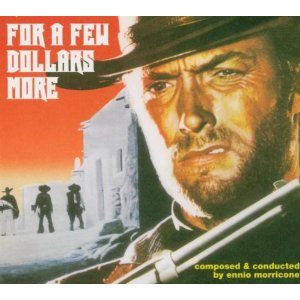
These three theatres have a special place in our hearts and we have fond memories about them. Malayalam films were few in those days and Hindi, Tamil and ,of course, English films were regularly shown. The Crown theatre, in particular, used to show Emglish films as and when they are released at other important centres. I still remenber seeing films like TEN COMMANDMENTS and BENHUR, a number of Westerns like 'the dollar series' of Clint East wood, A FIST FULL OF DOLLARS, A FEW DOLLARS MORE and THE GOOD, BAD, AND THE UGLY at Crown as also Yul Brynner's MAGNIFICENT SEVEN, and John Wayne's TRUE GRIT and THE MAN WHO SHOT LIBERTY VALANCE, BUTCH CASSIDY AND THE SUNDANCE KID and so on. Seeing Western cowboy films was a passion for us in those days. Hindi films LIKE MUGHAL-E-AZAM, MADHUMATI, NAYA DAUR and so on are also fresh in the memory. Tamil films were usually shown at Radha and I remember seeing films like Palum Pazhamum, Aalayamani, Kathalikka Neramillai, Vennira Adai, M.G.R's Ayirathil Oruvan, Balachander's Major Chandrakanth, Neerkumizhi etc.Malayalam films were seen mostly at Coronation. But the classic film,'Bridge on the River Kwai' was shown at Coronation. Yes, those were the days when we really enjoyed going to film theatres. Compared to that, going to a theatre nowadays has become a nightmare. No wonder theatres are being shut down left,right and centre to be mourned only by sentimentalist old timers.

A couple of months back, when I was at Kozhikode, I just walked around the city to see my old favourite theatres and it was then that I realised that except the four theatres mentioned earlier all the others are no more alive. But I was happy that The Crown, Coronation and Radha are still there . There has been no change to Radha and the hotel Arya Bhavan which stood in the compound is still there. The theatre is now air-conditioned and with Dolby and Dts. Malayalam film KAYAM was on. There has been a face lift on Coronation and it was gleaming with a fresh coat of paint. But its compound has been eaten away by the widened road. It may not survive the next widening of the road. The Crown, I found, was getting a facelift/a fresh coat of paint. They were showing the film TOURIST and I was temped to enter just for old time's sake but refrained as it was getting late for me to return. Later I realized that seeing a film at Crown alone like a stranger/outsider would have made me sadder.

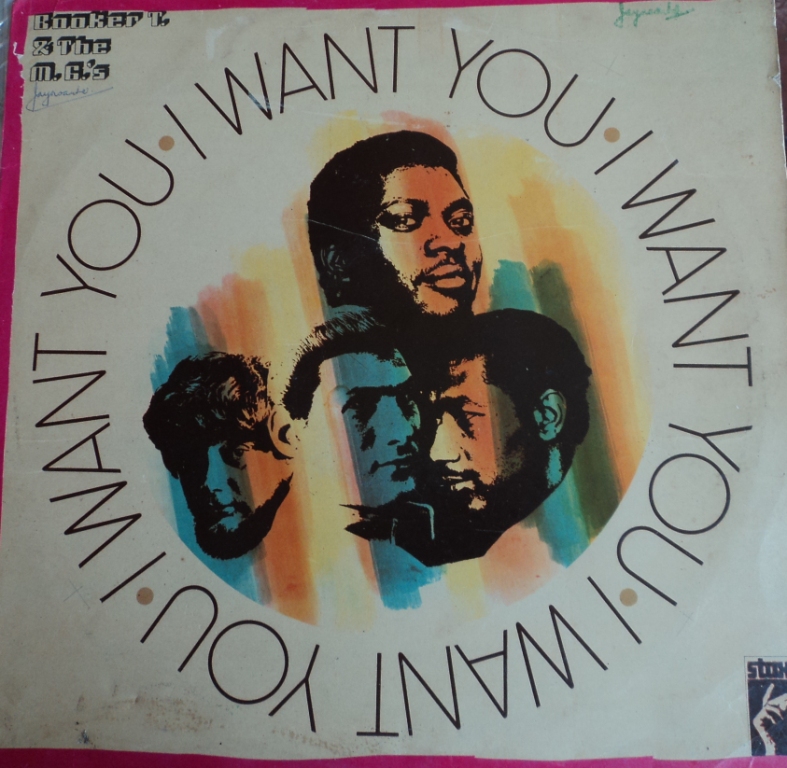
It was mostly during the 60s and 70s that I collected the English L.P. records. There are three LP records of Jim reeves, viz.,the famous 'Moonlight and Roses' with the title song and the beautiful song,'There is a new moon over my shoulder'.The other one is 'The Best of Jim Reeves' with his best selling songs,'The Blue Boy'and 'Four Walls'.The third is JIM REEVES-BIMBO' with his ever popular song 'Bimbo' in it. These three along with two records of Olivia Newton John,.viz.'Don't Stop Believing' and 'Olivia Physical 'are my favourite English records which I listen to often. I also listen to Cliff Richard's 'Love Songs' and Neil Diomond's album,'Classics-The Early Years'.Among the instrumental tunes the favourites are'GOLDEN NON-STOP DANCING 10--JAMES LAST.It has several beautiful songs including,'Raindrops keep falling on my head' used in film, 'Butch Cassidy and the Sundance kid' and the ACCORDIAN a.la CARTE. Among the LPs of jazz music the LP of Brooker T & the M.G.'s. titled 'I WANT YOU'with the song,'Johnny,I love you' is a favourite of mine. Another one is ,'THE VERY BEST OF WES MONTGOMERY.

Well, for a collector of English records these few records in my possession mean nothing. But their nostalgic value is what is important to me.


Tail piece:- Seeing the picture of Jim Reeves on the L.P. my grandson exclaimed
'Woh! Ricky Ponting! Awesome!