There are certain Hindi films of the 50s, 60s and the early 70s that had a lasting impression on us and the very mention of these films, even now, invokes nostalgic memories of our younger days. There may be several reasons for their being so close to one’s heart eventhough the story and the scenes might have faded from memory to a large extent. The main reason, for me, is, of course, the songs of these films which we are still hearing over the radio especially in the FM channels and Vividh Bharati and even now on Sri Lanka Broadcasting Corporation in the early hours of the day. The films were an integral part of our student life and thereafter and discussing them and hearing the songs on radio and from the lips of friends who excelled in singing them were our favourite pastime. Promotional programs comprising songs and dialogues from films aired usually for fifteen minutes through ‘Radio Ceylon’ used to be a topic of hot discussion. Film weekly SCREEN in which full page advertisements on films used to be published, was the affordable(costing 25 paise) and most sought after film publication apart from Filmfare which we could read only in reading rooms!
On a mental search, the first of such film is SHAHEED, the 1948 film starring Dilip Kumar, Kamini Kausal, Leela Chitnis etc. and a film based and inspired by the Quit India Movement. I still remember seeing the film as a nine year old along with my parents more than 60years back at a small town theatre. The images of the freedom fighters facing the police and shouting slogans and the hero becoming a martyr are still vaguely in mind. But what attracted us most was the patriotic song ‘Watan ki raah mein watan ki naujawan shaheed ho’ by Muhammed Rafi, Khan Mastana and chorus(music by Ghulam Haider) which we continued to hear on the radio, in the school and c
 ollege days and till recently on Independence days and Republic days over the loudspeakers! The song continues to be regarded as one of the best patriotic songs from Hindi films.
On a mental search, the first of such film is SHAHEED, the 1948 film starring Dilip Kumar, Kamini Kausal, Leela Chitnis etc. and a film based and inspired by the Quit India
 Movement. I still remember seeing the film as a nine year old along with my parents more than 60years back at a small town theatre. The images of the freedom fighters facing the police and shouting slogans and the hero becoming a martyr are still vaguely in mind. But what attracted us most was the patriotic song ‘Watan ki raah mein watan ki naujawan shaheed ho’ by Muhammed Rafi, Khan Mastana and chorus(music by Ghulam Haider) which we continued to hear on the radio, in the school and c
 ollege days and till recently on Independence days and Republic days over the loudspeakers! The song continues to be regarded as one of the best patriotic songs from Hindi films.
Then there is the 1957 film NAYA DAUR directed by B.R.Chopra with Dilip Kumar and Vyjayanthimala in the lead, Ajith in supporting role and Jeevan as ‘villain’. It was base d on the ordinary man’s resistence to mechanisation/modernisation arising out of their genuine f
 ear of losing their livelihood; the villain, Kundan,(
 Jeevan) going ahead with his plan to introduce bus service and the ‘tongawallahs’ led by Shankar(Dilip kumar)resisting it. The story ends with an exciting race in which Shankar’s tonga beats Kundan’s bus forcing Kundan to back out of his plan. The film bagged the Filmfare award for the best film. The
 scene in which Rajni(Vyjayanthimala) enjoying a ride in shankar’s tonga singing the duet ‘Maang ke saath tumhara’ (outstanding music score by O.P.Nayyar) is one of the memorable scenes from the film.
http://www.radioreloaded.com/tracks/?14957 d on the ordinary man’s resistence to mechanisation/modernisation arising out of their genuine f
 ear of losing their livelihood; the villain, Kundan,(
 Jeevan) going ahead with his plan to introduce bus service and the ‘tongawallahs’ led by Shankar(Dilip kumar)resisting it. The story ends with an exciting race in which Shankar’s tonga beats Kundan’s bus forcing Kundan to back out of his plan. The film bagged the Filmfare award for the best film. The
 scene in which Rajni(Vyjayanthimala) enjoying a ride in shankar’s tonga singing the duet ‘Maang ke saath tumhara’ (outstanding music score by O.P.Nayyar) is one of the memorable scenes from the film.
http://www.youtube.com/watch?v=ix8L9MvruAo
Producer Director Actor Guru Dutt’s film ‘C.I.D.’in black and white(1956) directed by Raj Khosla is another film having a lasting effect on us. A crime story with Dev Aanand, Waheeda Rahman, I.S.Johar and Jhony Walker it had again
 outstanding music by O.P.Nayyar.All the songs in the film were super hits. The Rafi-Geeta Dutt song, ‘Yeh hai Bombay meri jaan’ and the Rafi, Shamshad Begum, Aasha Bhosle chorus,’ Leke pahla pahla pyar’were on the lips of every college student in those days mainly for the rhythm and the ‘singability’, the former being the top of the chart in popularity for the year in the Binaca Geetmala programme. Shamshad Begum was at her best in the beautiful songs,’Booj mera kya naam re’ and ‘Kahin pe nighahen kahin pe nishana’. The evergreen Geeta Dutt song ‘Jaata kahan hein diwana’ and the duet with Rafi ‘Ankhon hi ankhon mein ishara hogaya,’ are also there and coupled with Jhonny walker’s comedy role as a pickpocket and Waheeda Rahman’s refreshing debut made this a memorable film.
Another great GuruDutt film was PYASA produced and directed by Guru Dutt and released in 1957. An intense romantic film, rated as one of the top 100 films of all time by Time Magazi
 ne in 2005, with scintillating music by S.D.Burman and superb acting by Guru Dutt, Mala Sinha and Waheeda Rahman was a sensation among filmgoers winning Filmfare Award for best music, best direction and best actor(Guru Dutt). All the songs in the film by Gita Dutt and Rafi were super hits and rated as one of the best film music of all time. The songs are intense, pathos filled and haunting . ‘Jane kya Tuhne kahi’and‘Aaj sanam mohe an
 g lagalo’ by Gita and ‘Jinhen naaz hai hind par woh kahani’ and ‘Yeh duniya agar mil bhi jaaye to Kya hai’ by Rafi gel with the mood of the film. The ending portion of the song ‘Yeh duniya’ will make the listener wonder about the power of Rafi’s voice just as the ‘Rakhwale’ song of Baiju Bawra! The evergreen Hemant Kumar hit, ‘Jane woh kaise log the’ is also there. The only lighter scene I can remember in this emotion charged film is the one in which Jhonny Walker sang the ‘Tel malish’ song ‘Sar jo tera chakraye’(Rafi). http://www.hindigeetmala.com/song/sar_jo_tera_chakraye.htm
One film still very fresh in our mind is SUJATA (1959) produced and directed by Bimal Roy with Sunil Dutt and Nutan in the lead. The film gained wide national attention as it
 dealt with the caste system and untouchability so wide spread in the country those days.The film received high critical acclaim and won Filmfare award for the best story, best movie, best direction and best actress(Nutan) and All India certificate of merit in the National Awards. The big feature of the film was the melodious music by S.D.Burman. ‘Kali ghata chhaye mora’ by Asha, ‘Bachpan ke din bhi kya din’ by Asha and Geeta and ‘Nanhi kali sone chali hawa dheere aana’ by Gita were sweet and melodious. Then there is the rare song,’Suno mere bandhure, suno mere mitwa’, based on Bengali folk music and rendered in the true rustic v
 oice
oice of S.D.Burman himself. One of the lasting memories is the special shows of the film arranged for the students of schools and colleges at concessional rates at the local theatre.The song scene in which the the hero Sunil Dutt was singing the song ‘Jalte hain jiske liye’ over the telephone to the heroine Nutan. The scene was a novel and refreshing change from the usual picturisation of similar songs. And what a song it was? One of the very best of Talat Mahmood.
http://www.youtube.com/watch?v=3X-zFcDGcZM
Bimal Roy productions’ film MADHUMATI (1958) produced and directed by Bimal Roy had caught our imagination as it was our first experience of a film dealing with the theme of reincarnation.Though the film had not received as much critical acclaim as Roy’s other films like Bandhini, Sujata etc., still, it is considered to be a landmark in Indian cinema for its theme, music, acting and the wholesome appeal it had for the audience. No wonder the film bagged the national award for best film, best direction, best supporting actor(Jhonny Walker) and best music(Salil Choudhury)and five Filmfae Awards including that for the best singer(Lata). Music by Salil Choudhury was the best feature of the film with the song ‘Aaja re’ becoming immortal. The duet of Lata and Mukesh, ‘Dil tadap tadap’ is one of the top duets ever of Hindi cinema. Rafi’s ‘Toote hue quawabon ne’ is another evergreen song. For students of the period l
 ike us the youthfulness of Dilip Kumar and the magnetic beauty of Vyjayanthimala in her captivating tribal attire were the points of discussion. Two memorable scenes were Dilip Kumar’s singing the song ‘Suhana safar aur eh mausam ‘ swinging a cane and prancing through the village and the scene in which Dilip again following the heroine and finally catching up with her and asking ‘Naam kya? and Vyjayanthinala responding fascinatingly demure. Incidentally it was one of those rare films which I managed to see twice by tightening my tight belt.
Like Madhumati there were several other films like Mahal, Kohra, Gumnam, Mera Saaya, Woh kaun thi and so on which dealt with supernatural subj ects. But it was the film BEES SAAL BAAD (1962) produced by singer-music director Hemant Kumar who also tuned the haunting songs of this suspense thriller(Director: Biren Nag) that made a lasting impression. The fact that the theme was based on the Sherlock Holmes story ‘The Hound of Baskervilles’, one of our favourite detective stories, might have contributed to the film capturing our hearts.The film with Biswajeet and Waheeda Rahman in the lead had, apart from the now familier singing female ghost in white saree, several eerie scenes which took us to the edge of the seats with fear! One such scene I still rememb
 er is where the ‘servant’, who turned out to be an accomplice of the killer, was showing a lantern into the dark night as a signal.The music of the film won the Filmfare Award for best singer(Lata) for the haunting song ‘Kahin Deep chalr kahin dil’. In the two songs, ‘Kahin deep jale kahin dil’ and ‘Bekarar kar ke hamein’ singer Hemant Kumar was at his best as he usually was in songs composed by himself. Yes, this film is one of the top musical suspense thriller ever of Hindi films.
Bimal Roy productions’ film MADHUMATI (1958) produced and directed by Bimal Roy had caught our imagination as it was our first experience of a film dealing with the theme of reincarnation.Though the film had not received as much critical acclaim as Roy’s other films like Bandhini, Sujata etc., still, it is considered to be a landmark in Indian cinema for its theme, music, acting and the wholesome appeal it had for the audience. No wonder the film
 bagged the national award for best film, best direction, best supporting actor(Jhonny Walker) and best music(Salil Choudhury)and five Filmfae Awards including that for the best singer(Lata). Music by Salil Choudhury was the best feature of the film with the song ‘Aaja re’ becoming immortal. The duet of Lata and Mukesh, ‘Dil tadap tadap’ is one of the top duets ever of Hindi cinema. Rafi’s ‘Toote hue quawabon ne’ is another evergreen song. For students of the period l
 ike us the youthfulness of Dilip Kumar and the magnetic beauty of Vyjayanthimala in her captivating tribal attire were the points of discussion. Two memorable scenes were Dilip Kumar’s singing the song ‘Suhana safar aur eh mausam ‘ swinging a cane and prancing through the village and the scene in which Dilip again following the heroine and finally catching up with her and asking ‘Naam kya? and Vyjayanthinala responding fascinatingly demure. Incidentally it was one of those rare films which I managed to see twice by tightening my tight belt.
Like Madhumati there were several other films like Mahal, Kohra, Gumnam, Mera Saaya, Woh kaun thi and so on which dealt with supernatural subj
 ects. But it was the film BEES SAAL BAAD (1962) produced by singer-music director Hemant Kumar who also tuned the haunting songs of this suspense thriller(Director: Biren Nag) that made a lasting impression. The fact that the theme was based on the Sherlock Holmes story ‘The Hound of Baskervilles’, one of our favourite detective stories, might have contributed to the film capturing our hearts.The film with Biswajeet and Waheeda Rahman in the lead had, apart from the now familier singing female ghost in white saree, several eerie scenes which took us to the edge of the seats with fear! One such scene I still rememb
 er is where the ‘servant’, who turned out to be an accomplice of the killer, was showing a lantern into the dark night as a signal.The music of the film won the Filmfare Award for best singer(Lata) for the haunting song ‘Kahin Deep chalr kahin dil’. In the two songs, ‘Kahin deep jale kahin dil’ and ‘Bekarar kar ke hamein’ singer Hemant Kumar was at his best as he usually was in songs composed by himself. Yes, this film is one of the top musical suspense thriller ever of Hindi films.
There are a few pairs of films which had such an impact on us that we could not think of one of them without thinking of the other. This inseparability may be due to several reaso ns depending on the person’s sentimental affinity to the actors, music, story, nostalgic memories about seeing the films, common factors of the films and so on. There is, for example, the 1962 film SAHEB BIBI AUR GHULAM of Guru Dutt Films starring Guru Dutt, Meena Kumari, Waheeda Rahman and Rahman based on a Bengali novel by Bimal Mitra and directed by Abrar Alvi. The story set on the life of a feudal family of the 19th century Bengal tells us the life of the Choti bahu of the family played true to life by Meena Kumari and ably supported by other characters played by Rahman, Guru Dutt and so on.The inte
 nsity with which Meena Kumari and Rahman played their roles had left a deep pain in the hearts of the filmgoers about the plight of women in the decaying feudal system. The drinking scenes potraying Rahman and Meena Kumari and the picture of Meena Kumari always gloriously dressed as the chotti bahu are still fresh in mind. No wonder Meena Kumari got the National award for best actress for her role in this film. The huge box-office success of the film was also largely due to the outstanding music score of Hemant Kumar and the soulful singing of Gita Dutt, who, like Jhonny Walker, was an integral part of Guru Dutt’s scheme of things. The songs ‘Piya aiso jiya mein samaaye gayo re’ and ‘Na jao saiyan chudake biyan’ are painfully sweet capturing the mood of the film. The film Saheb bibi aur ghulam always kindled memories of the film CHAUDVIN KA CHAAND(1960) yet another GuruDut Film directed by Mohammed Sadiq and starring Guru Dutt, Rahman, Waheeda Rahman and Jhonny Walker. This film tells a triangular love story in the household of a Nawab in the city of Lucknow and throws light on the life of the characters in the feudal system. The outstanding feature of the film is the music
  provided by music director Ravi.The song,’Chaudvin ka chaand ho’ by Rafi is, to me, one of the top 20 songs of Hindi films and it gave Rafi the Filmfare award for the best play back singer. The song scene showing Guru Dutt and Waheeda Rahman and the full moon peeping through the window and lighting up the face of the heroine is one of our enduring memories. The song ‘Ye Lucknow ki sar-zameen’(Rafi) is a poignant one capturing the mood of the film. In both films there were exquisite settings of interiors with heavy as well as light curtains, c
 arpets, huge doors and windows, draperies, luxuriously made cots and beds and so on true to the life of the rich in those days.
 ns depending on the person’s sentimental affinity to the actors, music, story, nostalgic memories about seeing the films, common factors of the films and so on. There is, for example, the 1962 film SAHEB BIBI AUR GHULAM of Guru Dutt Films starring Guru Dutt, Meena Kumari, Waheeda Rahman and Rahman based on a Bengali novel by Bimal Mitra and directed by Abrar Alvi. The story set on the life of a feudal family of the 19th century Bengal tells us the life of the Choti bahu of the family played true to life by Meena Kumari and ably supported by other characters played by Rahman, Guru Dutt and so on.The inte
 nsity with which Meena Kumari and Rahman played their roles had left a deep pain in the hearts of the filmgoers about the plight of women in the decaying feudal system. The drinking scenes potraying Rahman and Meena Kumari and the picture of Meena Kumari always gloriously dressed as the chotti bahu are still fresh in mind. No wonder Meena Kumari got the National award for best actress for her role in this film. The huge box-office success of the film was also largely due to the outstanding music score of Hemant Kumar and the soulful singing of Gita Dutt, who, like Jhonny Walker, was an integral part of Guru Dutt’s scheme of things. The songs ‘Piya aiso jiya mein samaaye gayo re’ and ‘Na jao saiyan chudake biyan’ are painfully sweet capturing the mood of the film. The film Saheb bibi aur ghulam always kindled memories of the film CHAUDVIN KA CHAAND(1960) yet another GuruDut Film directed by Mohammed Sadiq and starring Guru Dutt, Rahman, Waheeda Rahman and Jhonny Walker. This film tells a triangular love story in the household of a Nawab in the city of Lucknow and throws light on the life of the characters in the feudal system. The outstanding feature of the film is the music
  provided by music director Ravi.The song,’Chaudvin ka chaand ho’ by Rafi is, to me, one of the top 20 songs of Hindi films and it gave Rafi the Filmfare award for the best play back singer. The song scene showing Guru Dutt and Waheeda Rahman and the full moon peeping through the window and lighting up the face of the heroine is one of our enduring memories. The song ‘Ye Lucknow ki sar-zameen’(Rafi) is a poignant one capturing the mood of the film. In both films there were exquisite settings of interiors with heavy as well as light curtains, c
 arpets, huge doors and windows, draperies, luxuriously made cots and beds and so on true to the life of the rich in those days.
Film AARADHANA(1969) and KATI PATANG(1970) both produced and directed by Sakti Samanta were such a pair of films having lasting impression on many Hindi film enthusiasts of the period. Both have Rajesh Khanna in the lead with Sharmila Tagore as heroine in Aaradhana and Asha Parekh in Kati Patang. With the huge box office success of these two films Rajesh Khanna became the first super star of Hindi Cinma. A strong common feature of these two romantic films was the musical compositions of S.D.Burman in Aaradhna  and R.D.Burman in Kati Patang.The songs of the two films were trend setters bringing back Kishore Kumar as the leading play back singer and forcing a temporary eclipse on the legendary Rafi. ‘Aaradhana’ bagged the Filmfare Award for he best movie and Kishore Kumar the award for the best singer for the song ‘Roop tera mastana’. ‘Mere sapnon ki rani’ is a musical as well as a visual treat and the song scene showing Rajesh Khanna in a jeep with friend Sujit kumar at the wheel following Sharmila in a mini train casting demure glances is even now a favourite clipping in the TV channels.The duet(Kishore kumar-Lata) ‘Kora kagaz thha’ is another beautiful song. But in spite of the huge popularity and critical appreciation the Filmfare Award for the best music of the year was given to the music of Brahmachari(Shankar-Jaikishen)instead of Aaradhana. Film Kati Patang’s music had R.D.Burman at his versatile best. The song ‘Mera naam Shabnam’ is supposed to be the first rap song in Hindi films. ‘Yeh sham mustani’ and ‘yeh jo mushabbat hai’ both by Kishore are fascinating melodies. ‘Pyar Diwana hota hain mustaana’ is another melodious number by kishore even though the tune resembled that of ‘Kwaab ho tum ya koi hakikkat’ from film
 Teen Deviaan(S.D.Burman). Like Aaradhana, the music of Kati Patang also, to the great disaapointment of listeners, did not get Filmfare Award for 1970 inspite of huge popularity and critical acclaim!The award was bagged by Jeene ki raaah.(Lakshmikant –Pyarelal).
There are several other pairs of films also in this inseparable category like Ganga Jamuna and Leader, Nagin and Anarkali , Awara and Sree 420 and so on. There are also many more films which have a special place in our hearts. Well, about all of them, probably, in future posts.
 and R.D.Burman in Kati Patang.The songs of the two films were trend setters bringing back Kishore Kumar as the leading play back singer and forcing a temporary eclipse on the legendary Rafi. ‘Aaradhana’ bagged the Filmfare Award for he best movie and Kishore Kumar the award for the best singer for the song ‘Roop tera mastana’. ‘Mere sapnon ki rani’ is a musical as well as a visual treat and the song scene showing Rajesh Khanna in a jeep with friend Sujit kumar at the wheel following Sharmila in a mini train casting demure glances is even now a favourite clipping in the TV channels.The duet(Kishore kumar-Lata) ‘Kora kagaz thha’ is another beautiful song. But in spite of the huge popularity and critical appreciation the Filmfare Award for the best music of the year was given to the music of Brahmachari(Shankar-Jaikishen)instead of Aaradhana. Film Kati Patang’s music had R.D.Burman at his versatile best. The song ‘Mera naam Shabnam’ is supposed to be the first rap song in Hindi films. ‘Yeh sham mustani’ and ‘yeh jo mushabbat hai’ both by Kishore are fascinating melodies. ‘Pyar Diwana hota hain mustaana’ is another melodious number by kishore even though the tune resembled that of ‘Kwaab ho tum ya koi hakikkat’ from film
 Teen Deviaan(S.D.Burman). Like Aaradhana, the music of Kati Patang also, to the great disaapointment of listeners, did not get Filmfare Award for 1970 inspite of huge popularity and critical acclaim!The award was bagged by Jeene ki raaah.(Lakshmikant –Pyarelal).
There are several other pairs of films also in this inseparable category like Ganga Jamuna and Leader, Nagin and Anarkali , Awara and Sree 420 and so on. There are also many more films which have a special place in our hearts. Well, about all of them, probably, in future posts.


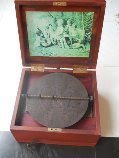
 Numerous lovers of gramophones, old valve radios, record players, records and musical antiques and accessories from all parts of India and abroad, are nowadays looking to this man, Mohammed Shafi, popularly known as Gramophone Shafi and Gramophone Man, for their requirements of these items as well as to service their equipments. For the hobbyists in this field Shafi is one of the very few persons in this part of the country who is able to satisfy their needs which are unique and at the same time varied and person specific.




 delicate nuances and variations.She was inspired by her father who himself was a disciple of of Ustad Fayas Khansaheb. She had her early training under
 Ustad Amanat Hussein Khan and was also groomed by that redoubtable composer Jaidev and the great singer composer Madhurani. In fact we started taking interest in ghazals only with the experience of listening to the likes of Penaaz Masani, Talat Azeez, Punkaj Udhas, Jagjit Singh and so on before beginning to understand and appreciate the work of stalwarts like Mehdi Hassan, Ghulam Ali, Begum Akthar and others. Some of the beautiful [Image]ghazals of Penaaz Masaani coming to mind are ‘Dil mein rakhlo’, the traditional ‘Dil-e-naadaan tujhe hua kya hai’, ‘ Halka kabhi padega’ and


