 As youngsters we were
always attracted by the romantic, poetic and meaningful titles of films
released those days. The titles used to be so catchy and thought-provoking that
we marked it as a ‘must see’ film the moment the news of the launch of the film
reached us. During those days the launch of films used to be widely published
in the print media like THE SCREEN and
CINE ADVANCE and so on with full
page advertisements, news and photos including that of well attended ‘muhurat’
ceremonies. Follow-up reports indicating progress of production, delays,
recordings and so on also used to be there giving us a lot of topics for
discussion and to be prepared for the release of the films.
As youngsters we were
always attracted by the romantic, poetic and meaningful titles of films
released those days. The titles used to be so catchy and thought-provoking that
we marked it as a ‘must see’ film the moment the news of the launch of the film
reached us. During those days the launch of films used to be widely published
in the print media like THE SCREEN and
CINE ADVANCE and so on with full
page advertisements, news and photos including that of well attended ‘muhurat’
ceremonies. Follow-up reports indicating progress of production, delays,
recordings and so on also used to be there giving us a lot of topics for
discussion and to be prepared for the release of the films.

 One of the earliest of
such films whose title fascinated us was
AB DILLI DOOR NAHIN(1957) produced by Raj Kapur with Motilal, Yakub,
Anwar Hussain and Sulochana in lead roles. There is nothing in my memory about
our seeing the film but the songs composed by the talented music director
Duttaram had lingered in memory. The song
‘Yeh chaman hamara’ by Asha Bhosle and the children’s song ‘Chhun chhun
karti’ by Rafi are still fresh in memory.That also reminds me of an earlier
film of Raj Kapur, AAG (1948) with Raj Kapur, Nargis and Kamini Kausal in the
lead which had music by Ram Ganguly. The voice of Shamshad Begum was at its
powerful best in the song, ‘Kahe koyal shor machaye re’ sometimes heard on the
radio even now. While titles with lengthy names were more attractive to us,
short names like AAG and PYASA caught
our imagination, may be for the depth of meaning/sentiments they conveyed. A
few of the outstanding songs of all time in Hindi films are from film PYASA.
Geeta Dutt’s ‘Jane kya tune kahi’, Hemant’s kumar’s ‘Jane woh kaise log they’
and Rafi’s ‘Jinhen naaz hai Hind par’ and ‘Yey duniya agar milbhi jaye to’ are immortal
compositions of S.D.Burman.
One of the earliest of
such films whose title fascinated us was
AB DILLI DOOR NAHIN(1957) produced by Raj Kapur with Motilal, Yakub,
Anwar Hussain and Sulochana in lead roles. There is nothing in my memory about
our seeing the film but the songs composed by the talented music director
Duttaram had lingered in memory. The song
‘Yeh chaman hamara’ by Asha Bhosle and the children’s song ‘Chhun chhun
karti’ by Rafi are still fresh in memory.That also reminds me of an earlier
film of Raj Kapur, AAG (1948) with Raj Kapur, Nargis and Kamini Kausal in the
lead which had music by Ram Ganguly. The voice of Shamshad Begum was at its
powerful best in the song, ‘Kahe koyal shor machaye re’ sometimes heard on the
radio even now. While titles with lengthy names were more attractive to us,
short names like AAG and PYASA caught
our imagination, may be for the depth of meaning/sentiments they conveyed. A
few of the outstanding songs of all time in Hindi films are from film PYASA.
Geeta Dutt’s ‘Jane kya tune kahi’, Hemant’s kumar’s ‘Jane woh kaise log they’
and Rafi’s ‘Jinhen naaz hai Hind par’ and ‘Yey duniya agar milbhi jaye to’ are immortal
compositions of S.D.Burman.

 Apart from the beauty
of the titles, the expectations about the music score of the films also had
caught our imagination for earmarking the films as ‘must see’. The
advertisements about the launch of films usually gave equal prominence to music
directors just like directors and lead stars. Names like Shankar Jaikishen,
O.P.Nayyar, S.D.Burman, Naushad, Madan Mohan,C.Ramachandra and so on were
‘guarantees’ to the film goers for outstanding songs. Three films with nostalgic
titles and Shankar Jaikishen’s music come immediately to mind. One is R.K.Films’ JIS DESH MEIN GANGA BAHTI HAI with
Raj kapur and Padmini in the lead.The sizzling romantic number ‘Ho maine pyar
kiya’ and the melodious ‘O basanti pavan’, both by Lata , were hugely popular
even before the film was released. There is also an enchanting chorus led by
Lata, Geeta Dutt, Mukesh, Manna Dey and Mahendra Kapur, ‘Hum bhi hain tum bhi ho’ beautifully filmed
on the lead actors. Probably this is the only song in which these five great singers had joined together.
The song is also unique in that a few
lines were picturised on Pran, a rare event for a ‘villain’to sing a song. Pran as villain Raka
had given a stellar performance.The music of the film also bagged the Filmfare
Award for best music of the year 1960.
Apart from the beauty
of the titles, the expectations about the music score of the films also had
caught our imagination for earmarking the films as ‘must see’. The
advertisements about the launch of films usually gave equal prominence to music
directors just like directors and lead stars. Names like Shankar Jaikishen,
O.P.Nayyar, S.D.Burman, Naushad, Madan Mohan,C.Ramachandra and so on were
‘guarantees’ to the film goers for outstanding songs. Three films with nostalgic
titles and Shankar Jaikishen’s music come immediately to mind. One is R.K.Films’ JIS DESH MEIN GANGA BAHTI HAI with
Raj kapur and Padmini in the lead.The sizzling romantic number ‘Ho maine pyar
kiya’ and the melodious ‘O basanti pavan’, both by Lata , were hugely popular
even before the film was released. There is also an enchanting chorus led by
Lata, Geeta Dutt, Mukesh, Manna Dey and Mahendra Kapur, ‘Hum bhi hain tum bhi ho’ beautifully filmed
on the lead actors. Probably this is the only song in which these five great singers had joined together.
The song is also unique in that a few
lines were picturised on Pran, a rare event for a ‘villain’to sing a song. Pran as villain Raka
had given a stellar performance.The music of the film also bagged the Filmfare
Award for best music of the year 1960.


 The film DIL APNA AUR
PREET PARAI (1961), a familiar romantic
story with Raj Kumar and Meena Kumari in
the lead was another much awaited film with music by Shankar Jaikishen. In fact
the scintillating songs of Lata like
‘the title song and ‘Ajib daastan’ and the rhythmic ‘Mera dil ab tera o saajana’,
were the mainstay of the film. No wonder that the music of this film won the
Filmfare Award for best music in 1961.There are also a few other romantic
titles with Shankar Jaikishens’ music like
Jab pyar kisee se hota hai, Ek dil sow afsane, Roop ki rani choron ka
raja, Aas ka panchi, Aayi Milan ki bela and so on. The main feature is that
each title formed part of the lyric of a song in the film, a speciality of
Shankar Jaikishen. A rare song,’Dil mera ek aas ka panchi’, by the talented
Subir Sen made the film Aas ka panchi
memorable.
The film DIL APNA AUR
PREET PARAI (1961), a familiar romantic
story with Raj Kumar and Meena Kumari in
the lead was another much awaited film with music by Shankar Jaikishen. In fact
the scintillating songs of Lata like
‘the title song and ‘Ajib daastan’ and the rhythmic ‘Mera dil ab tera o saajana’,
were the mainstay of the film. No wonder that the music of this film won the
Filmfare Award for best music in 1961.There are also a few other romantic
titles with Shankar Jaikishens’ music like
Jab pyar kisee se hota hai, Ek dil sow afsane, Roop ki rani choron ka
raja, Aas ka panchi, Aayi Milan ki bela and so on. The main feature is that
each title formed part of the lyric of a song in the film, a speciality of
Shankar Jaikishen. A rare song,’Dil mera ek aas ka panchi’, by the talented
Subir Sen made the film Aas ka panchi
memorable.


 Music director O.P.
Nayyar was also associated with a few films with imaginative titles with his
famous mastery over rhythm. The names
readily coming to mind are the Joy Mukherjee-Asha Parekh film PHIR WOHI DIL
LAAYA HOON (1963), the Biswajeet-Sharmila Tagore film YEH RAAT PHIR NA AAYEGI
and the Dhrmendra-MalaSinha starrer BAHAREN PHIR BHI AAYEGI (1966). In Phir
wohi dil laaya hoon O.P. Nayyar was in his elements exploiting to the hilt the
vocal talent of Rafi and Asha to create rhythmic, foot-tapping songs with his
typical ‘horse trots’ in the background. The title song as well as ‘ ‘Lakhon
mein nigahon men’ are songs so typical of Rafi that one cannot think of hearing
them in any other voice. Similarly the semi-classical song ‘Dekho bijli dole
bin baadal ki’ and the melodious ‘Ankhon se jo uthri hai dil men’ are typical
Asha numbers for O.P. Nayyar. Films Baharen Phir....’ and ‘Yeh raat
phir...’have many of the top Asha
numbers for O.P.Nayyar with ‘Koi kahde kahde’, ‘Woh hanske mile hum se’,’Yeh
wohi jaga hai’ and the highly rhythmic ‘Mohabet cheese hai kya’ are a few of
them. Who can forget the popular hit ‘Huzure wala’ powerfully rendered by Asha
and Minoo Purushottam in Yeh raat ? Mahendra Kapur owed his success to a large
extent to his songs ‘Badal jaaye agar mali’ (Baharen phir) and ‘Mere pyar woh
hai’(Yeh Raat) along with his songs for OP in Sawan ki Ghata and Kismat. The
word ‘phir’ also reminds me of another two romantic film titles,one “Dil ne
phir yaad kiya’(1966) with beautiful
music score by Sonic Omi. The pleasant Rafi numbers ‘Lo chehra surkh sharaab’
and ‘Khaliyon ne gunghat khola’along with the title song ‘Dil ne phir yaad..’
by Rafi,Suman Kalyanpur and Mukesh come readily to mind. The second is the Raj
Kapur- Mala Sinha film, PHIR SUBHA HOGI (1958), based on Feodor Dostoyevsky’s
famous novel Crime and Punishment. Two songs composed by the great Khayyam,
‘Phir subah kabhi to aayegi’(a solo by Mukesh and as a duet by Mukesh and Asha)
and ‘Chino Arab hamara Hindustan hamara’ (Mukesh) contributed for the success
of the film to a large extent.
Music director O.P.
Nayyar was also associated with a few films with imaginative titles with his
famous mastery over rhythm. The names
readily coming to mind are the Joy Mukherjee-Asha Parekh film PHIR WOHI DIL
LAAYA HOON (1963), the Biswajeet-Sharmila Tagore film YEH RAAT PHIR NA AAYEGI
and the Dhrmendra-MalaSinha starrer BAHAREN PHIR BHI AAYEGI (1966). In Phir
wohi dil laaya hoon O.P. Nayyar was in his elements exploiting to the hilt the
vocal talent of Rafi and Asha to create rhythmic, foot-tapping songs with his
typical ‘horse trots’ in the background. The title song as well as ‘ ‘Lakhon
mein nigahon men’ are songs so typical of Rafi that one cannot think of hearing
them in any other voice. Similarly the semi-classical song ‘Dekho bijli dole
bin baadal ki’ and the melodious ‘Ankhon se jo uthri hai dil men’ are typical
Asha numbers for O.P. Nayyar. Films Baharen Phir....’ and ‘Yeh raat
phir...’have many of the top Asha
numbers for O.P.Nayyar with ‘Koi kahde kahde’, ‘Woh hanske mile hum se’,’Yeh
wohi jaga hai’ and the highly rhythmic ‘Mohabet cheese hai kya’ are a few of
them. Who can forget the popular hit ‘Huzure wala’ powerfully rendered by Asha
and Minoo Purushottam in Yeh raat ? Mahendra Kapur owed his success to a large
extent to his songs ‘Badal jaaye agar mali’ (Baharen phir) and ‘Mere pyar woh
hai’(Yeh Raat) along with his songs for OP in Sawan ki Ghata and Kismat. The
word ‘phir’ also reminds me of another two romantic film titles,one “Dil ne
phir yaad kiya’(1966) with beautiful
music score by Sonic Omi. The pleasant Rafi numbers ‘Lo chehra surkh sharaab’
and ‘Khaliyon ne gunghat khola’along with the title song ‘Dil ne phir yaad..’
by Rafi,Suman Kalyanpur and Mukesh come readily to mind. The second is the Raj
Kapur- Mala Sinha film, PHIR SUBHA HOGI (1958), based on Feodor Dostoyevsky’s
famous novel Crime and Punishment. Two songs composed by the great Khayyam,
‘Phir subah kabhi to aayegi’(a solo by Mukesh and as a duet by Mukesh and Asha)
and ‘Chino Arab hamara Hindustan hamara’ (Mukesh) contributed for the success
of the film to a large extent.

 There are two romantic
musical films of the 50s whose title and music made them a hot topic of
discussion among us. One is the hilarious romantic film KALI TOPI LAL RUMAL(1959)
with Chandrasekhar and Shakila in the lead. The film’s music was by
Chitragupta, a highly underrated music director who had tuned beautiful songs
for films like Tower house, Apalam chapalam and several films from AVM of the
south like Mein chup rahoongi and Mein bhi ladki hoon etc. Two songs of Kali
Topi deserves special mention,viz.,Lata’s ‘Daga daga vai vai vai’ and the
pathos filled duet with Rafi ‘Laagi
chhoote na’. The other is DEKH KABIRA ROYA(1957) with Anup Kumar, Ameeta and
Anita Guha in the lead. Music lovers are ever grateful to music director Madan
Mohan for the wonderful music of the film. The most popular two of the ten
songs are Manna Dey’s ‘Kaun aaya mere man ki dware’ and Talat Mahmood’s ‘Humse
aaya na gaya tumse’. The captivating way Manna Dey was singing the first word
‘kaun’ and the remaining lyrics is a treat to the years. One can’t think of
Talat without remembering the song ‘Humse aaya’.Lata’s light classical number
‘Meri veena tum bin roye’ and ‘Tu pyar kare ya thukraye’ are a few of Lata’s
best for Madan Mohan.
There are two romantic
musical films of the 50s whose title and music made them a hot topic of
discussion among us. One is the hilarious romantic film KALI TOPI LAL RUMAL(1959)
with Chandrasekhar and Shakila in the lead. The film’s music was by
Chitragupta, a highly underrated music director who had tuned beautiful songs
for films like Tower house, Apalam chapalam and several films from AVM of the
south like Mein chup rahoongi and Mein bhi ladki hoon etc. Two songs of Kali
Topi deserves special mention,viz.,Lata’s ‘Daga daga vai vai vai’ and the
pathos filled duet with Rafi ‘Laagi
chhoote na’. The other is DEKH KABIRA ROYA(1957) with Anup Kumar, Ameeta and
Anita Guha in the lead. Music lovers are ever grateful to music director Madan
Mohan for the wonderful music of the film. The most popular two of the ten
songs are Manna Dey’s ‘Kaun aaya mere man ki dware’ and Talat Mahmood’s ‘Humse
aaya na gaya tumse’. The captivating way Manna Dey was singing the first word
‘kaun’ and the remaining lyrics is a treat to the years. One can’t think of
Talat without remembering the song ‘Humse aaya’.Lata’s light classical number
‘Meri veena tum bin roye’ and ‘Tu pyar kare ya thukraye’ are a few of Lata’s
best for Madan Mohan.
Yes, there are many
more such attractively titled films like Barsat ki raat, Meri surat teri
ankhen, Baharon ke sapne, Chaudwin ka chaand, Yadon ki baraat, Hum kise se kam
nahin, Do ankhen barah hath,Tere ghar ke samne, Aaye din bahar ke, Door gagan ki
chaon mein, Usne kaha tha, Bedard zamana kya jane and so on. But let me
conclude this post with a few lines on the last named three films.
Film DOOR GAGAN KI CHHAON MEIN(1964) was a much awaited film for us as it was, in
every respect, an exclusive Kishore Kumar film, a monument for his genius. The
film was written,produced, directed and acted in by him with Supriya Chatterji
in the lead. The music was composed by Kishore Kumar and a few songs were sung
by him. In ‘Ah chal ke tujhe’ and ‘Koy lauta de mere’ Kishore’s voice was at
its soft melodious best. Title song Door
gagan ki chhaon men and Rahi tu ruk mat
jaana are typical Hemant Kumar songs in his
characteristic voice.
 |
| 76rpm DISC USNE KAHA THA |
|
Film USNE KAHA THA (1960),
a typical love story partly against the back ground of war with Sunil Dutt and
Nanda in the lead,was a much discussed
film on the campus, probably for the story in which the hero sacrifices his life on the battle ground
for saving the life of his former lover’s husband because she had told him to
protect her husband!(Usne kaha tha). Two songs composed by Salil Choudhury are
fresh in memory. Talat Mahmood’s ‘Ah ha rim jim kar ke pyare pyare’ and ‘Janewale sipahi se poochho’, by Manna
Dey, Sabitha Bannerji and chorus.
The film and the title
BEDARD ZAMANA KYA JANE (1959) with Asok Kumar, Nirupa Roy and Pran with a
contrived story lingers in my mind probably for the songs ‘Naina hain jadu
bhare’ by Mukesh and ‘Door kahi tu’, a duet by Lata and Rafi both songs composed by Kalyanji Virji Shah.76
It is a pity that many
of the beautiful songs of lesser known films are not heard nowadays except to a
limited extent on AIR and that lovers of old Hindi film songs, especially from
the young generation, are fed with only popular songs of a few successful films
over and over again.
Tail piece: While
typing this post, a popular
song by Jagjit Singh was repeatedly
passing through my mind. “....magar mujhko lauta do bachpan ka
sawan, Woh kagaz ki kashti woh baarish
ka paani ..............Badi khoobsurat tha woh zindagani”.Take away everything but give me back my childhood days.

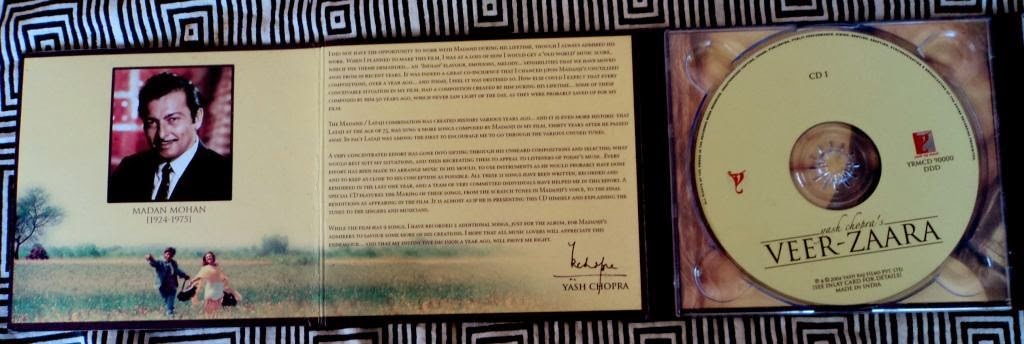
 When
one thinks of old melodies, especially haunting melodies and ghazals of Hindi
films one name that always come up top in the mind is that of the highly
talented music director the late Madan Mohan (1924 – 1975).His career in Hindi
film music, beginning with the 1950 film
Ankhen , to the haunting melodies of film ‘Woh kaun thi’(1964), through his
National Award winning music in film Dastak(1970), to the much acclaimed
music of ‘Mausam (1974) and to the films released posthumously including the
IIFF Award winning music of ‘Veer –
Zaara’, had been a musical journey in the pursuit of excellence firmly rooted in Indian classical music where
no compromises with quality were allowed. There were innumerable films for which he had
composed music in which the Madan Mohan stamp was always there even in those
films which did not do well in the box
office.
When
one thinks of old melodies, especially haunting melodies and ghazals of Hindi
films one name that always come up top in the mind is that of the highly
talented music director the late Madan Mohan (1924 – 1975).His career in Hindi
film music, beginning with the 1950 film
Ankhen , to the haunting melodies of film ‘Woh kaun thi’(1964), through his
National Award winning music in film Dastak(1970), to the much acclaimed
music of ‘Mausam (1974) and to the films released posthumously including the
IIFF Award winning music of ‘Veer –
Zaara’, had been a musical journey in the pursuit of excellence firmly rooted in Indian classical music where
no compromises with quality were allowed. There were innumerable films for which he had
composed music in which the Madan Mohan stamp was always there even in those
films which did not do well in the box
office.

 One
notable feature of Madan Mohan’s music was his penchant for using ghazal style
for his compositions especially during his
earlier years. It was Madan Mohan who best exploited Talat
Mahmood’s voice and talent for ghazals
beginning with MADHOSH(1951-Meena Kumari-Manhar Desai)).In this film Talat rendered the beautiful lyric penned by Rajah
Mehdi Ali khan,viz., ‘Meri yaad mein tumna aansoo bahana’ in his inimitable
trembling voice. This song remains a
much listened Talat ghazal even today. In film AASHIANA(1952-Raj Kapoor-
Nargis), Madan Mohan composed two
evergreen ghazals for Talat using the lyrics of Rajinder Kishen. One is, ‘Mera
qarar leja’ and the other is, ‘ Mein paagal mera manva paagal’ often aired by
Radio Ceylon and Vividh Bharati those days. In film CHHOTE BABU (1957-Nimmi-Sekhar), there
is this popular ghazal by Talat, viz., ‘Do din ki mohabat mein humne’ and a Lata-Talat duet, ‘Teri chhamak ke aankhon
mein’. In the highly popular film DEKH
KABIRA ROYA(1967) with lesser known actors like Anita guha and Annop Kumar, Madan Mohan
again uses the voice of Talat Mahmood to create another great ghazal, ‘Hum
se aaya na gaya tum se bulaya’, the lyrics penned by Rajinder Kishen. In fact
this film was a big musical hit with a wide variety of songs composed by Madan
Mohan. There are two semiclassical numbers by Lata, the first being ‘Lagan tose
lagi balma’ and the sweet melodious ‘Meri veena tum bin roye’. Along with these
two there is also the soft, romantic
melody, ‘Tu pyar kare ya thukraye’
indicating how best he uses Lata’s voice to embellish his
rather difficult compositions. The film is also noted for one of the top
semi-classical melodies of Manna Dey,viz., ‘Kaun aaya mere man ke dware’. It is
a pity that the music of this film did not fetch a Filmfare Award for Madan
Mohan.
One
notable feature of Madan Mohan’s music was his penchant for using ghazal style
for his compositions especially during his
earlier years. It was Madan Mohan who best exploited Talat
Mahmood’s voice and talent for ghazals
beginning with MADHOSH(1951-Meena Kumari-Manhar Desai)).In this film Talat rendered the beautiful lyric penned by Rajah
Mehdi Ali khan,viz., ‘Meri yaad mein tumna aansoo bahana’ in his inimitable
trembling voice. This song remains a
much listened Talat ghazal even today. In film AASHIANA(1952-Raj Kapoor-
Nargis), Madan Mohan composed two
evergreen ghazals for Talat using the lyrics of Rajinder Kishen. One is, ‘Mera
qarar leja’ and the other is, ‘ Mein paagal mera manva paagal’ often aired by
Radio Ceylon and Vividh Bharati those days. In film CHHOTE BABU (1957-Nimmi-Sekhar), there
is this popular ghazal by Talat, viz., ‘Do din ki mohabat mein humne’ and a Lata-Talat duet, ‘Teri chhamak ke aankhon
mein’. In the highly popular film DEKH
KABIRA ROYA(1967) with lesser known actors like Anita guha and Annop Kumar, Madan Mohan
again uses the voice of Talat Mahmood to create another great ghazal, ‘Hum
se aaya na gaya tum se bulaya’, the lyrics penned by Rajinder Kishen. In fact
this film was a big musical hit with a wide variety of songs composed by Madan
Mohan. There are two semiclassical numbers by Lata, the first being ‘Lagan tose
lagi balma’ and the sweet melodious ‘Meri veena tum bin roye’. Along with these
two there is also the soft, romantic
melody, ‘Tu pyar kare ya thukraye’
indicating how best he uses Lata’s voice to embellish his
rather difficult compositions. The film is also noted for one of the top
semi-classical melodies of Manna Dey,viz., ‘Kaun aaya mere man ke dware’. It is
a pity that the music of this film did not fetch a Filmfare Award for Madan
Mohan. The
fruitful association of Madan Mohan with Talat continued in films like BAHANA(1960), with Meena Kumari
in the lead. The lyrics penned by Rajinder Kishen, viz., ‘Barehen aasman
meri manzil bata’ was tuned soulfully for Talat to croon and again an Asha –
Talat ghazal was created with the lines beginning ‘Teri nighahen mein teri hi
baton mein’. Lata’s melodious
semi-classical number ‘Ja re badra bairi
ja’ was also there. Sadly these songs are not often heard nowadays.The culmination
of the success of the duo of Madan and Talat was in the film JAHAN ARA(1962-Bharat Bhusha-Mala
Sinha)) . The three ghazals penned by Rajinder Kishen,’Phir wohi sham wohi
gham’, ‘Main teri nazar ka suroor hoon’ and ‘Teri aankh ke ansoo’were probably
the last of Talat’s fascinating ghazals for Hindi films as Talat Mahmood faded
away thereafter to the regret of music lovers.
The
fruitful association of Madan Mohan with Talat continued in films like BAHANA(1960), with Meena Kumari
in the lead. The lyrics penned by Rajinder Kishen, viz., ‘Barehen aasman
meri manzil bata’ was tuned soulfully for Talat to croon and again an Asha –
Talat ghazal was created with the lines beginning ‘Teri nighahen mein teri hi
baton mein’. Lata’s melodious
semi-classical number ‘Ja re badra bairi
ja’ was also there. Sadly these songs are not often heard nowadays.The culmination
of the success of the duo of Madan and Talat was in the film JAHAN ARA(1962-Bharat Bhusha-Mala
Sinha)) . The three ghazals penned by Rajinder Kishen,’Phir wohi sham wohi
gham’, ‘Main teri nazar ka suroor hoon’ and ‘Teri aankh ke ansoo’were probably
the last of Talat’s fascinating ghazals for Hindi films as Talat Mahmood faded
away thereafter to the regret of music lovers. A
few of the best ever filmy ghazals of Rafi was also composed by Madan Mohan.The
one coming to my mind readily is, ‘Main nighahe tere chehre se’ and ‘Yah hi hai
tamanna’ from film AAP KI PARCHHAYIYAN (1964-Dharmendra-Sashikala) with lyrics
by Rajah Mehdi Ali Khan who along with Rajinder Kishen was the most favoured
lyrist of Madan Mohan. In film DULHAN EK RAAT KI(1967- Dharmendra-Nutan)we can
listen to Rafi at his melodious best with the song ‘Ek haseen sham ko dil mera
kho gaya’(Lyrics: Raja Mehdi Ali Khan).In film GATEWAY OF INDIA (1957-Bharat Bhushan-Pradeep
Kumar-Madhubala)the duet ‘Do ghadi woh to pass ho baithe’ has two versions, one
by Asha-Rafi and the other by Lata-Rafi,
both versions equally captivating. In film AAKHRI
DAU(1958-Sekhar-Nutan)there is this popular Rafi ghazal.’Tujhe kya sunaon mein
dilruba’ and the melodious Rafi-Asha duet, ‘Humsafar saath apna chhod chale’.
A
few of the best ever filmy ghazals of Rafi was also composed by Madan Mohan.The
one coming to my mind readily is, ‘Main nighahe tere chehre se’ and ‘Yah hi hai
tamanna’ from film AAP KI PARCHHAYIYAN (1964-Dharmendra-Sashikala) with lyrics
by Rajah Mehdi Ali Khan who along with Rajinder Kishen was the most favoured
lyrist of Madan Mohan. In film DULHAN EK RAAT KI(1967- Dharmendra-Nutan)we can
listen to Rafi at his melodious best with the song ‘Ek haseen sham ko dil mera
kho gaya’(Lyrics: Raja Mehdi Ali Khan).In film GATEWAY OF INDIA (1957-Bharat Bhushan-Pradeep
Kumar-Madhubala)the duet ‘Do ghadi woh to pass ho baithe’ has two versions, one
by Asha-Rafi and the other by Lata-Rafi,
both versions equally captivating. In film AAKHRI
DAU(1958-Sekhar-Nutan)there is this popular Rafi ghazal.’Tujhe kya sunaon mein
dilruba’ and the melodious Rafi-Asha duet, ‘Humsafar saath apna chhod chale’.
 Another
feature of Madan Mohan’s music was his preference for female voice and most of
his haunting melodies were in female
voice. In fact a perusal of the LP albums of films with his music will reveal
the dominance of female singers which, of course, in no way had affected the quality of his
songs. In film ADALAT (1958-Nargis-Pradeep Kumar) all the songs except a chorus
were in female voice with Lata’s ‘Yun
hasraton ke dagh’ and ‘Unko yeh shikayat hai’ topping the list.It was only in
his earlier films when he was using the voice of Talat Mahmood that we could see better use of male voice.
Still Madan Mohan had used the voice of Mukesh for two of his famous
melodies.One is the grief filled melody
from film DUNIYA NA MANE(1959-Mala
Sinha-Pradeep Kumar)viz., ‘Ham chal rahe hai, woh chal rahe hai, Magar
duniyawalo ke dil jal rahe hai’. There is also a happy version of this song, a
duet, by Lata -Mukesh. The other is a ghazal from SANJOG(1961-Anita
Guha-Pradeep Kumar),viz.,’Bhooli hui yadon’ which used to be heard frequently over
the radio. Film Sanjog is also noted for two of the most popular melodies of
Lata,viz.,’Woh bhooli dastan lo phir yaad a gayi’and ‘Badli se nikla hai chaand’. The
strength,timbre and quality of Lata’s voice are in full evidence in these songs
as well as in the song ‘Ham pyar me jalne walo ko chaine kaha haaye aaram kahe’
from film JAILOR(1958- Raj Kumar-Gita Bali). No wonder Lata remained as the
most trusted singer of Madan Mohan and their personal rapport seemed to have
contributed much to the success of the duo. No wonder that Lata’s tribute to Madan Mohan
echos this . “Madan Mohan’s music will
prevail; for it embodied melody, the basis of Indian music. It was my privilege
to have sung for him.”
Another
feature of Madan Mohan’s music was his preference for female voice and most of
his haunting melodies were in female
voice. In fact a perusal of the LP albums of films with his music will reveal
the dominance of female singers which, of course, in no way had affected the quality of his
songs. In film ADALAT (1958-Nargis-Pradeep Kumar) all the songs except a chorus
were in female voice with Lata’s ‘Yun
hasraton ke dagh’ and ‘Unko yeh shikayat hai’ topping the list.It was only in
his earlier films when he was using the voice of Talat Mahmood that we could see better use of male voice.
Still Madan Mohan had used the voice of Mukesh for two of his famous
melodies.One is the grief filled melody
from film DUNIYA NA MANE(1959-Mala
Sinha-Pradeep Kumar)viz., ‘Ham chal rahe hai, woh chal rahe hai, Magar
duniyawalo ke dil jal rahe hai’. There is also a happy version of this song, a
duet, by Lata -Mukesh. The other is a ghazal from SANJOG(1961-Anita
Guha-Pradeep Kumar),viz.,’Bhooli hui yadon’ which used to be heard frequently over
the radio. Film Sanjog is also noted for two of the most popular melodies of
Lata,viz.,’Woh bhooli dastan lo phir yaad a gayi’and ‘Badli se nikla hai chaand’. The
strength,timbre and quality of Lata’s voice are in full evidence in these songs
as well as in the song ‘Ham pyar me jalne walo ko chaine kaha haaye aaram kahe’
from film JAILOR(1958- Raj Kumar-Gita Bali). No wonder Lata remained as the
most trusted singer of Madan Mohan and their personal rapport seemed to have
contributed much to the success of the duo. No wonder that Lata’s tribute to Madan Mohan
echos this . “Madan Mohan’s music will
prevail; for it embodied melody, the basis of Indian music. It was my privilege
to have sung for him.” 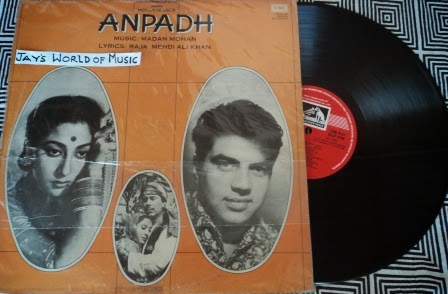
 The
songs of film WOH KAUN THI(1964-Sadhana-Manoj Kumar)’ was the crowning glory of
Madan Mohan’s musical success. The film
with supernatural incidents as its central theme, as in films like Madhumati
and Bees Saal Baad, had some of the top haunting melodies common for such
themes those days. The song “ Aajare pardesi(Madhumati-Lata- Music: Salil
Chaudhury) and ‘Kahin deep jale kahi dil(
Bees Saal Baad-Lata-Hemant Kumar)were till then two of the top such songs. But Madan Mohan, with three songs by Lata,
viz., ‘Naina bharase rim jim rim jim’, ‘Jo hamne dastan apnee sunaaee aap kyon
roye’ and ‘Lag jaa gale se phir ye haseen raat ho na ho’ rewrote history. The
beautiful lyrics of these songs were by Raja Mehdi Ali Khan and no wonder why
he became one of Madan Mohan’s preferred lyricists. That reminds me about a
rare duet of Madan in this film, viz.,the
breezy “Chhod kar tere pyar ka daman’ (Lata-Mahendra Kapoor)The
music of this film was nominated for
Filmfare Award for best music but to Madan Mohan’s eternal disappointment the
Award was given to Laxmikant Pyarelel for film DOSTI. Even prior to Woh Kaun
Thi, Madan Mohan in film
ANPADH(1962-Dharmendra-Mala Sinha) had composed
a few beautiful melodies including the path breaking ‘Aap ki nazaron ne
samjha’ of Lata. There is also a rare
comic song in the film , Mahendra Kapoor’s ‘Sikandar ne porus se’. The success
of Woh kaun thi led director Raj Khosla
to make two more films with similar theme viz. Mera Saaya and Anita. For Mera
Saaya Madan Mohan composed yet another haunting
memody for Lata,viz., ‘Too jahan jahan chalega mera saaya sath hoga’ which was
a superhit. But for film ANITA Laxmikant Pyarelel was assigned to do the
job. Obviously, by then this musical duo had arrived on top. The decline of
Madan Mohan also started around this
period.
The
songs of film WOH KAUN THI(1964-Sadhana-Manoj Kumar)’ was the crowning glory of
Madan Mohan’s musical success. The film
with supernatural incidents as its central theme, as in films like Madhumati
and Bees Saal Baad, had some of the top haunting melodies common for such
themes those days. The song “ Aajare pardesi(Madhumati-Lata- Music: Salil
Chaudhury) and ‘Kahin deep jale kahi dil(
Bees Saal Baad-Lata-Hemant Kumar)were till then two of the top such songs. But Madan Mohan, with three songs by Lata,
viz., ‘Naina bharase rim jim rim jim’, ‘Jo hamne dastan apnee sunaaee aap kyon
roye’ and ‘Lag jaa gale se phir ye haseen raat ho na ho’ rewrote history. The
beautiful lyrics of these songs were by Raja Mehdi Ali Khan and no wonder why
he became one of Madan Mohan’s preferred lyricists. That reminds me about a
rare duet of Madan in this film, viz.,the
breezy “Chhod kar tere pyar ka daman’ (Lata-Mahendra Kapoor)The
music of this film was nominated for
Filmfare Award for best music but to Madan Mohan’s eternal disappointment the
Award was given to Laxmikant Pyarelel for film DOSTI. Even prior to Woh Kaun
Thi, Madan Mohan in film
ANPADH(1962-Dharmendra-Mala Sinha) had composed
a few beautiful melodies including the path breaking ‘Aap ki nazaron ne
samjha’ of Lata. There is also a rare
comic song in the film , Mahendra Kapoor’s ‘Sikandar ne porus se’. The success
of Woh kaun thi led director Raj Khosla
to make two more films with similar theme viz. Mera Saaya and Anita. For Mera
Saaya Madan Mohan composed yet another haunting
memody for Lata,viz., ‘Too jahan jahan chalega mera saaya sath hoga’ which was
a superhit. But for film ANITA Laxmikant Pyarelel was assigned to do the
job. Obviously, by then this musical duo had arrived on top. The decline of
Madan Mohan also started around this
period. Madan
Mohan continued to compose music for several films but the magic, somehow,
remained unnoticed. The films were not box office successes and top artists
were also not there in them. He tried to make a come back with HEER RANJHA
(1970) and DASTAK(1971-Sanjeev Kumar-Rehna Sultan) but it was not enough. The
highly acclaimed Dastak fetched the
National Award for Madan Mohan with Lata’s
‘Baiyaan na bharo balma’ becoming highly popular. Again his music in
film MAUSAM( 1974-Sanjeev Kumar Sharmila Tagore) showed that he had not lost
his magic as the Lata-Bhupinder duet ‘Dil dhoondtha hai’ and Lata’s solo ‘Ruke ruke se qadam’ achieving tremendous
popularity.But alas! In spite of his enormous talent and success he could not
get the same prominence which Naushad, S.D.Burman, Shankar Jaikishen and even a Laxmikant Pyarelal could get. He was
more like the ‘Kabhi Kabhie’ Khayyam and the ‘Hum Dono Jaidev who also could
not achieve the celebrity status in spite of talent and success. Talat Mahmood,
Madan Mohan’s most trusted male voice, said
of Madan Mohan; ‘ Madan Mohan never made any compromises in his life and in
every tune he produced there was newness”. Probably his inability to make compromises
stood in the way.
Madan
Mohan continued to compose music for several films but the magic, somehow,
remained unnoticed. The films were not box office successes and top artists
were also not there in them. He tried to make a come back with HEER RANJHA
(1970) and DASTAK(1971-Sanjeev Kumar-Rehna Sultan) but it was not enough. The
highly acclaimed Dastak fetched the
National Award for Madan Mohan with Lata’s
‘Baiyaan na bharo balma’ becoming highly popular. Again his music in
film MAUSAM( 1974-Sanjeev Kumar Sharmila Tagore) showed that he had not lost
his magic as the Lata-Bhupinder duet ‘Dil dhoondtha hai’ and Lata’s solo ‘Ruke ruke se qadam’ achieving tremendous
popularity.But alas! In spite of his enormous talent and success he could not
get the same prominence which Naushad, S.D.Burman, Shankar Jaikishen and even a Laxmikant Pyarelal could get. He was
more like the ‘Kabhi Kabhie’ Khayyam and the ‘Hum Dono Jaidev who also could
not achieve the celebrity status in spite of talent and success. Talat Mahmood,
Madan Mohan’s most trusted male voice, said
of Madan Mohan; ‘ Madan Mohan never made any compromises in his life and in
every tune he produced there was newness”. Probably his inability to make compromises
stood in the way.


