 As youngsters we were
always attracted by the romantic, poetic and meaningful titles of films
released those days. The titles used to be so catchy and thought-provoking that
we marked it as a ‘must see’ film the moment the news of the launch of the film
reached us. During those days the launch of films used to be widely published
in the print media like THE SCREEN and
CINE ADVANCE and so on with full
page advertisements, news and photos including that of well attended ‘muhurat’
ceremonies. Follow-up reports indicating progress of production, delays,
recordings and so on also used to be there giving us a lot of topics for
discussion and to be prepared for the release of the films.

 One of the earliest of
such films whose title fascinated us was
AB DILLI DOOR NAHIN(1957) produced by Raj Kapur with Motilal, Yakub,
Anwar Hussain and Sulochana in lead roles. There is nothing in my memory about
our seeing the film but the songs composed by the talented music director
Duttaram had lingered in memory. The song
‘Yeh chaman hamara’ by Asha Bhosle and the children’s song ‘Chhun chhun
karti’ by Rafi are still fresh in memory.That also reminds me of an earlier
film of Raj Kapur, AAG (1948) with Raj Kapur, Nargis and Kamini Kausal in the
lead which had music by Ram Ganguly. The voice of Shamshad Begum was at its
powerful best in the song, ‘Kahe koyal shor machaye re’ sometimes heard on the
radio even now. While titles with lengthy names were more attractive to us,
short names like AAG and PYASA caught
our imagination, may be for the depth of meaning/sentiments they conveyed. A
few of the outstanding songs of all time in Hindi films are from film PYASA.
Geeta Dutt’s ‘Jane kya tune kahi’, Hemant’s kumar’s ‘Jane woh kaise log they’
and Rafi’s ‘Jinhen naaz hai Hind par’ and ‘Yey duniya agar milbhi jaye to’ are immortal
compositions of S.D.Burman.

 Apart from the beauty
of the titles, the expectations about the music score of the films also had
caught our imagination for earmarking the films as ‘must see’. The
advertisements about the launch of films usually gave equal prominence to music
directors just like directors and lead stars. Names like Shankar Jaikishen,
O.P.Nayyar, S.D.Burman, Naushad, Madan Mohan,C.Ramachandra and so on were
‘guarantees’ to the film goers for outstanding songs. Three films with nostalgic
titles and Shankar Jaikishen’s music come immediately to mind. One is R.K.Films’ JIS DESH MEIN GANGA BAHTI HAI with
Raj kapur and Padmini in the lead.The sizzling romantic number ‘Ho maine pyar
kiya’ and the melodious ‘O basanti pavan’, both by Lata , were hugely popular
even before the film was released. There is also an enchanting chorus led by
Lata, Geeta Dutt, Mukesh, Manna Dey and Mahendra Kapur, ‘Hum bhi hain tum bhi ho’ beautifully filmed
on the lead actors. Probably this is the only song in which these five great singers had joined together.
The song is also unique in that a few
lines were picturised on Pran, a rare event for a ‘villain’to sing a song. Pran as villain Raka
had given a stellar performance.The music of the film also bagged the Filmfare
Award for best music of the year 1960.


 The film DIL APNA AUR
PREET PARAI (1961), a familiar romantic
story with Raj Kumar and Meena Kumari in
the lead was another much awaited film with music by Shankar Jaikishen. In fact
the scintillating songs of Lata like
‘the title song and ‘Ajib daastan’ and the rhythmic ‘Mera dil ab tera o saajana’,
were the mainstay of the film. No wonder that the music of this film won the
Filmfare Award for best music in 1961.There are also a few other romantic
titles with Shankar Jaikishens’ music like
Jab pyar kisee se hota hai, Ek dil sow afsane, Roop ki rani choron ka
raja, Aas ka panchi, Aayi Milan ki bela and so on. The main feature is that
each title formed part of the lyric of a song in the film, a speciality of
Shankar Jaikishen. A rare song,’Dil mera ek aas ka panchi’, by the talented
Subir Sen made the film Aas ka panchi
memorable.


 Music director O.P.
Nayyar was also associated with a few films with imaginative titles with his
famous mastery over rhythm. The names
readily coming to mind are the Joy Mukherjee-Asha Parekh film PHIR WOHI DIL
LAAYA HOON (1963), the Biswajeet-Sharmila Tagore film YEH RAAT PHIR NA AAYEGI
and the Dhrmendra-MalaSinha starrer BAHAREN PHIR BHI AAYEGI (1966). In Phir
wohi dil laaya hoon O.P. Nayyar was in his elements exploiting to the hilt the
vocal talent of Rafi and Asha to create rhythmic, foot-tapping songs with his
typical ‘horse trots’ in the background. The title song as well as ‘ ‘Lakhon
mein nigahon men’ are songs so typical of Rafi that one cannot think of hearing
them in any other voice. Similarly the semi-classical song ‘Dekho bijli dole
bin baadal ki’ and the melodious ‘Ankhon se jo uthri hai dil men’ are typical
Asha numbers for O.P. Nayyar. Films Baharen Phir....’ and ‘Yeh raat
phir...’have many of the top Asha
numbers for O.P.Nayyar with ‘Koi kahde kahde’, ‘Woh hanske mile hum se’,’Yeh
wohi jaga hai’ and the highly rhythmic ‘Mohabet cheese hai kya’ are a few of
them. Who can forget the popular hit ‘Huzure wala’ powerfully rendered by Asha
and Minoo Purushottam in Yeh raat ? Mahendra Kapur owed his success to a large
extent to his songs ‘Badal jaaye agar mali’ (Baharen phir) and ‘Mere pyar woh
hai’(Yeh Raat) along with his songs for OP in Sawan ki Ghata and Kismat. The
word ‘phir’ also reminds me of another two romantic film titles,one “Dil ne
phir yaad kiya’(1966) with beautiful
music score by Sonic Omi. The pleasant Rafi numbers ‘Lo chehra surkh sharaab’
and ‘Khaliyon ne gunghat khola’along with the title song ‘Dil ne phir yaad..’
by Rafi,Suman Kalyanpur and Mukesh come readily to mind. The second is the Raj
Kapur- Mala Sinha film, PHIR SUBHA HOGI (1958), based on Feodor Dostoyevsky’s
famous novel Crime and Punishment. Two songs composed by the great Khayyam,
‘Phir subah kabhi to aayegi’(a solo by Mukesh and as a duet by Mukesh and Asha)
and ‘Chino Arab hamara Hindustan hamara’ (Mukesh) contributed for the success
of the film to a large extent.

 There are two romantic
musical films of the 50s whose title and music made them a hot topic of
discussion among us. One is the hilarious romantic film KALI TOPI LAL RUMAL(1959)
with Chandrasekhar and Shakila in the lead. The film’s music was by
Chitragupta, a highly underrated music director who had tuned beautiful songs
for films like Tower house, Apalam chapalam and several films from AVM of the
south like Mein chup rahoongi and Mein bhi ladki hoon etc. Two songs of Kali
Topi deserves special mention,viz.,Lata’s ‘Daga daga vai vai vai’ and the
pathos filled duet with Rafi ‘Laagi
chhoote na’. The other is DEKH KABIRA ROYA(1957) with Anup Kumar, Ameeta and
Anita Guha in the lead. Music lovers are ever grateful to music director Madan
Mohan for the wonderful music of the film. The most popular two of the ten
songs are Manna Dey’s ‘Kaun aaya mere man ki dware’ and Talat Mahmood’s ‘Humse
aaya na gaya tumse’. The captivating way Manna Dey was singing the first word
‘kaun’ and the remaining lyrics is a treat to the years. One can’t think of
Talat without remembering the song ‘Humse aaya’.Lata’s light classical number
‘Meri veena tum bin roye’ and ‘Tu pyar kare ya thukraye’ are a few of Lata’s
best for Madan Mohan.
Yes, there are many
more such attractively titled films like Barsat ki raat, Meri surat teri
ankhen, Baharon ke sapne, Chaudwin ka chaand, Yadon ki baraat, Hum kise se kam
nahin, Do ankhen barah hath,Tere ghar ke samne, Aaye din bahar ke, Door gagan ki
chaon mein, Usne kaha tha, Bedard zamana kya jane and so on. But let me
conclude this post with a few lines on the last named three films.
Film DOOR GAGAN KI CHHAON MEIN(1964) was a much awaited film for us as it was, in
every respect, an exclusive Kishore Kumar film, a monument for his genius. The
film was written,produced, directed and acted in by him with Supriya Chatterji
in the lead. The music was composed by Kishore Kumar and a few songs were sung
by him. In ‘Ah chal ke tujhe’ and ‘Koy lauta de mere’ Kishore’s voice was at
its soft melodious best. Title song Door
gagan ki chhaon men and Rahi tu ruk mat
jaana are typical Hemant Kumar songs in his
characteristic voice.
 |
| 76rpm DISC USNE KAHA THA |
|
Film USNE KAHA THA (1960),
a typical love story partly against the back ground of war with Sunil Dutt and
Nanda in the lead,was a much discussed
film on the campus, probably for the story in which the hero sacrifices his life on the battle ground
for saving the life of his former lover’s husband because she had told him to
protect her husband!(Usne kaha tha). Two songs composed by Salil Choudhury are
fresh in memory. Talat Mahmood’s ‘Ah ha rim jim kar ke pyare pyare’ and ‘Janewale sipahi se poochho’, by Manna
Dey, Sabitha Bannerji and chorus.
The film and the title
BEDARD ZAMANA KYA JANE (1959) with Asok Kumar, Nirupa Roy and Pran with a
contrived story lingers in my mind probably for the songs ‘Naina hain jadu
bhare’ by Mukesh and ‘Door kahi tu’, a duet by Lata and Rafi both songs composed by Kalyanji Virji Shah.76
It is a pity that many
of the beautiful songs of lesser known films are not heard nowadays except to a
limited extent on AIR and that lovers of old Hindi film songs, especially from
the young generation, are fed with only popular songs of a few successful films
over and over again.
Tail piece: While
typing this post, a popular
song by Jagjit Singh was repeatedly
passing through my mind. “....magar mujhko lauta do bachpan ka
sawan, Woh kagaz ki kashti woh baarish
ka paani ..............Badi khoobsurat tha woh zindagani”.Take away everything but give me back my childhood days.


 The most popular brand
of music players was NATIONAL,(Pronounced by a section as Nasenal) made and
marketed by Mitsushita Electric Industrial Co., Japan, which later became
Panasonic Corporation and their products appeared as National, National
Panasonic , Panasonic and Technics. Other brands were Soni, Hitachi, Sharp,
Toshiba, Akai, Philips and so on. Originally all these brands were ‘Made in
Japan’only; but later they were made in other countries also including India
and China. I had a Sharp compact recorder purchased in Bangalore in 1971 but I
don’t know where it is now. A similar looking National Panasonic cassette
recorder(made in Japan)purchased around the same period is still with me in good
working condition. Both cost around
Rs.800/-each those days. In early 1970s
BUSH introduced a similar compact cassette recorder in India costing around
Rs.900/- along with the famous and popular
transistor radio Bush Baron. But the Bush model of cassette recorder was no
match for the National cassette recorders in quality and price. My efforts to
get the very popular Bush Baron radio set of the late 60s repaired were in
vain. But the Philips Victor radio of
1970 which used to be kept on throughout the day during cricket matches is
still working! The small Philips pocket radio used for hearing cricket commentary is still used during power
cuts as well as while sitting in one corner of the terrace to be away from the
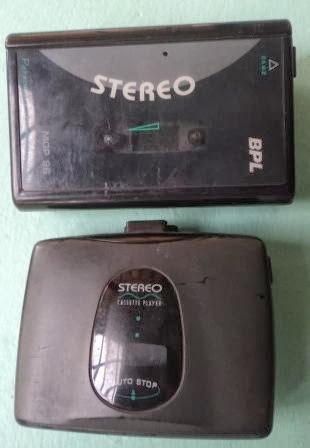
T.V. and to be in the company of oneself! Yes, the tiny BPL Stereo Walkman cassette player and another
similar one of the 90s are still there evoking
nostalgia.


 There were many Indian
and foreign brands manufactured in India like Murphy, Nelco, HMV, Philips,
BPl/Sanyo, Bush/Akai, Videocon/Toshiba, Telefunken/Grundig and so son. We had
also a very popular local brand of transistor sets. viz., KELTRON. Their sets,
Keltron Kamal and Keltron Kranti, were noted for good performance . The tiny
Kamal set bought in 1983/84 , still used by me, lends credence to this. But over
the years, with the revolution in
electronic/music industry and change in people’s listening habits these once
wonderful products have faded from even the memory of many. Philips, Panasonic,
Soni, etc. are still marketing small
radios on a limited scale targeting old timers. A few major manufacturers like
Toshiba, JVC etc. and others also
marketing All-in-One sets like, for
example, AFTRON
BOOM BOX and NIPPOTEC Rechargeable radio
cum CARD/USB player.The Boombox is a Radio cum DVD/MP3/VCD/CD/USB/MMC /Cassette
player! But I really do not think that devices like the small transistor radios,
two-in-ones etc. will make a comeback even though the surge being made by record players and
vinyl records worldwide in recent years does evoke a faint ray of hope. What is
disheartening for the enthusiasts is the
sight, at repair shops and service centres, of dusty heaps of tiny radios,
amplifiers, cassette decks and a variety
of other old equipments which once occupied a prominent space in the drawing
rooms of the owners, lying uncared for. Owners’ apathy, repairers’reluctance/resistance to spend time
on them and difficulty in getting spares have, regrettably, made them a part of the bulging global electronics
waste.


